Hits: 67 img
AI-Driven Thermal Crisis Meets Its Match: Breakthrough Low-Dielectric Phenyl Silicone Oil Cooling Fluid Shatters Foreign Monopoly
The explosive growth of artificial intelligence is creating an unprecedented thermal management crisis. As AI chip Thermal Design Power (TDP) surpasses 1000W, traditional air cooling has reached its physical limits. The solution, increasingly, lies in immersion cooling technology—and at its heart is a new generation of phenyl silicone oil cooling fluid that is breaking long-standing technical monopolies.
A Leap Forward in Dielectric Performance
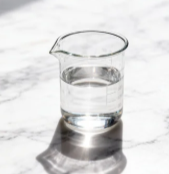
A groundbreaking phenyl-modified silicone oil coolant, specifically designed for next-generation AI servers and sub-3nm chip lithography, was recently unveiled at a global semiconductor thermal management summit. Its core performance metric—a dielectric constant as low as 2.06—significantly outperforms comparable international products measuring 2.26. This achievement marks a major milestone in China's ability to produce high-end electronic chemicals independently.
The Science of Low Dielectric Constant
The key to this superior dielectric performance lies in molecular engineering. Researchers introduced bulky phenyl groups into the polysiloxane backbone. The steric hindrance effect of the benzene rings effectively reduces molecular polarization under electric fields. This not only dramatically lowers the dielectric constant and loss tangent but also substantially improves thermal stability and flash point.
Validated for Reliability and Safety
Beyond electrical properties, thermal stability is paramount. Test data confirms that this novel phenyl silicone oil coolant operates continuously for 1,000 hours at 200°C without decomposition and exhibits zero corrosion to metals such as copper and aluminum. This high level of thermo-oxidative stability ensures absolute safety in long-term, high-load immersion cooling systems.
Empowering "East Data West Computing"
The product has entered pilot trials in leading Chinese supercomputing centers. By outperforming imported alternatives while offering cost advantages and supply chain security, this domestically produced phenyl silicone oil coolant is poised to significantly reduce data center PUE (Power Usage Effectiveness) values. This aligns perfectly with the national "East Data West Computing" project, which aims to optimize the allocation of computing resources across China.
Advancing High-Refractive-Index Applications
In parallel with industrial breakthroughs, the personal care sector is witnessing a revolution driven by phenyl silicone oil. At the in-cosmetics Global 2026 exhibition in Paris, phenyl trimethicone (a classic phenyl silicone fluid) was highlighted for its exceptional gloss-enhancing properties.
Incomparable Shine and Sensory Feel: Phenyl silicone oil's high refractive index (typically 1.46-1.53 vs. 1.403 for standard dimethicone) imparts superior shine and a luxurious feel to lipsticks, foundations, and sunscreens. It forms a thin, elastic, and breathable film on the skin or hair, providing water resistance, softness, and a smooth, non-sticky after-feel.
Versatile Formulations: This fluid is compatible with a wide range of vegetable, ester, and alcohol-based fluids. It easily disperses pigments and powders, ensuring homogeneous and stable particle distribution, which is critical for achieving high SPF values in sunscreens and intense color payoff in lipsticks.
Extreme Heat Resistance in Aerospace
A patent published in 2026 detailed a new phenyl-vinyl silicone rubber crosslinked with POSS (Polyhedral Oligomeric Silsesquioxane) containing phenyl groups. This material demonstrated a thermal decomposition temperature exceeding 400℃ with the addition of heat-resistant additives, far surpassing traditional silicone rubber. This breakthrough opens new possibilities for seals and coatings in aerospace applications, including reusable rockets and hypersonic vehicles.