Hydrogen-Containing Silicone Oil Market Runs at a High Level, Prices Rise Driven by New Energy and High-End Manufacturing Demand
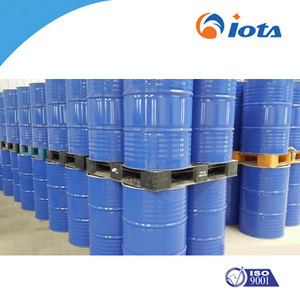
Recently, the domestic silicone market has maintained a strong high-level trend. As a key intermediate in the silicone industrial chain, hydrogen-containing silicone oil has seen continuous price increases driven by rising upstream raw materials and surging downstream demand, ushering in a period of development dividends for the industry. According to industry monitoring data, as of April 12, 2026, the ex-factory quotation of methyl hydrogen-containing silicone oil in ton barrels by major domestic manufacturers has reached 16,600 yuan/ton, an increase of 300 yuan within a week, and the mainstream market transaction range is 16,000-16,300 yuan/ton, an increase of more than 5% compared with the beginning of the year.
The price increase is mainly due to two major factors. On the upstream side, metallic silicon, as the core raw material of hydrogen-containing silicone oil, has fluctuated upward due to factors such as power rationing in Yunnan. In March 2024, it rose by 15% due to power rationing, directly increasing the cost of hydrogen-containing silicone oil by 8%, and the cost pressure of the industrial chain has been continuously transmitted. On the downstream side, the explosive growth in demand from new energy, high-end manufacturing and other fields has become the core driving force for pulling the demand for hydrogen-containing silicone oil. The demand for low-viscosity and high-purity hydrogen-containing silicone oil in the photovoltaic encapsulant field has a compound annual growth rate of 8.9%, and the semiconductor packaging field has put forward higher requirements for product impurity control, requiring metal impurities to be controlled within 1ppm and Si-H deviation not exceeding ±0.05wt%, driving the surge in demand for high-end hydrogen-containing silicone oil.
In terms of industry pattern, the global hydrogen-containing silicone oil market presents a "tripartite confrontation" situation. Three major manufacturers, Bluestar, Dow Chemical and Momentive, account for 50% of the market share, and domestic enterprises are accelerating their catch-up. Data shows that in 2024, the scale of China's hydrogen-containing silicone oil market accounted for 36% of the world, and it is expected to rise to 38% in 2031, forming a global industrial pattern with China as the core and Europe and the United States as technical support. Currently, domestic production capacity has reached 350,000 tons/year, but the import dependence on high-end products (hydrogen content >1.5%) is still 40%. The Ministry of Industry and Information Technology's "Standards for the Silicone Industry (2024 Edition)" clearly requires that the hydrogen content control accuracy of new projects shall be ≤±0.03%, forcing enterprises to accelerate technological upgrading.
Industry insiders predict that with the continuous release of demand from downstream new energy, semiconductor and other fields, coupled with the industry reshuffle brought by the upcoming implementation of the EU Carbon Border Adjustment Mechanism (CBAM) in 2026, the hydrogen-containing silicone oil market will continue to run at a high level, and enterprises with high-end product production capacity and carbon footprint management advantages will occupy a dominant position in the market.