China's Fluorosilicone Oil Industry Enters a New Era of High-Quality Development Driven by Policy and Technology, with Prominent Industrial Cluster Effects
April 13, 2026 — In recent years, driven by policy guidance, technological innovation, and surging market demand, China's fluorosilicone oil industry has gradually emerged from the development dilemma of "surplus in low-end products and shortage in high-end products". It has formed a regional industrial cluster pattern of "three main, one auxiliary", with the Yangtze River Delta as the core, the Pearl River Delta as the characteristic, and the Southwest region as the supplement. The industry scale continues to expand, the product structure is continuously optimized, and the R&D strength has been significantly improved, marking a steady march into a new stage of high-quality development.
According to the latest data from the China Fluorosilicone Organic Materials Industry Association, China's total output of fluorosilicone oil reached 128,000 tons in 2025, a year-on-year increase of 16.4%. The market size exceeded 15.87 billion yuan, representing a growth of 18.3% compared to 2024, significantly outpacing the 8.2% growth rate of the traditional silicone oil market. The proportion of high-end products rose to 41.8%, an increase of 6.6 percentage points from 2024. Import dependence dropped sharply from 58% in 2023 to 32% in 2025. The industry's competitiveness continues to strengthen, making it a crucial growth engine for the transformation and upgrading of China's organic silicon industry.
Regional Clusters Take Shape, Each with Distinctive Industrial Ecosystems
The trend of regional cluster development has become increasingly prominent, forming unique industrial ecosystems across the country.
Yangtze River Delta: The Core Agglomeration Zone (48.3% of National Output)
As the core agglomeration area of China's fluorosilicone oil industry, the Yangtze River Delta accounts for 48.3% of the national output and 51.7% of the consumption volume. Jiangsu, Zhejiang, and Shanghai collectively contribute 48.4% of the total national capacity, leveraging a complete chemical industry chain, intensive scientific research resources, and an efficient logistics system to build an integrated industrial ecosystem of "monomer-intermediate-terminal product".
Jiangsu Province, particularly the Zhangjiagang and Huai'an areas, hosts leading enterprises such as Wanhua Chemical and Xinan Group, housing several specialized silicone industrial parks. The Jiangsu High-tech Fluorochemical Industrial Park in Changshu has gathered 78 well-known enterprises, including Daikin of Japan, Arkema of France, and Chemours of the US, with a total investment of over 40 billion yuan, establishing Asia's largest fluorine material production and import-export base.
Zhejiang boasts the Quzhou Intelligent Manufacturing New Town High-tech Zone, ranked first in China's top 10 fluorosilicone chemical industrial parks. Led by Juhua Group and Zhongtian Fluorosilicone, it has built a full industry chain from fluorite resource development to high-end fluorosilicone terminal products. The Hangzhou Bay Shangyu Economic and Technological Development Zone, ranked second nationally, excels in high-purity fluorosilicone oil and specialty modified products. In 2025, the total output value of fluorosilicone oil in the Yangtze River Delta reached 9.68 billion yuan, a year-on-year increase of 22.5%, with high-end products accounting for 48%, solidifying its position as China's core supply base for high-end fluorosilicone oil.
Pearl River Delta: The Application-Driven Cluster
The Pearl River Delta features an application-driven cluster, fueled by its leading position in terminal industries such as electronic information, new energy, and automotive manufacturing. In 2025, Guangdong's consumption of electronic-grade fluorosilicone oil reached 39,000 tons, accounting for 43.9% of the national total in this segment, driving several local enterprises to obtain SEMI certification and achieve breakthroughs in domestic substitution of electronic-grade fluorosilicone oil.
Shenzhen, Dongguan, and Huizhou, home to terminal giants like Huawei and BYD, impose stringent performance requirements that compel local fluorosilicone enterprises to transform towards high purity, low impurity, and customization. Currently, customized products account for 52% of the region's output, far exceeding the national average, focusing on niche sectors such as flexible electronic packaging, new energy vehicle thermal management, and high-end automotive seals. In 2025, Guangdong's export volume of fluorosilicone oil reached 2.1 billion US dollars, a year-on-year increase of 29.7%, accounting for 38.1% of the national total export value, making it the core export region for China's fluorosilicone oil, with products mainly sold to Southeast Asia, Europe, and North America.
Southwest Region: The Resource-Oriented Supplementary Cluster
The Southwest region serves as a resource-oriented supplementary cluster, becoming a key destination for industrial transfer under the "Dual Carbon" goal, supported by abundant hydropower resources and low industrial electricity prices. In Sichuan and Yunnan, the average industrial electricity price is only 0.39 yuan/kWh, 21% lower than that in eastern regions. This has attracted leading enterprises like Hesheng Silicon Industry to deploy green production capacity.
The Zigong South Sichuan New Material Chemical Park, ranked sixth among China's top 10 fluorosilicone industrial parks, has formed a complete "salt-chlor-alkali chemical-fluorine chemical-fluorosilicone new material" industry chain. Hesheng Silicon Industry's "Green Power Silicon-based New Material Project" in Baoshan, Yunnan, has built an annual production line of 8,000 tons of fluorosilicone oil, fully powered by hydropower. The product's carbon footprint is 30.5% lower than the industry benchmark, with comprehensive energy consumption per unit product of only 0.76 tons of standard coal/ton, lower than the national average of 0.96 tons, setting a benchmark for green production in the industry. In 2025, the fluorosilicone oil output in the Southwest region reached 19,000 tons, a year-on-year increase of 18.7%, mainly supplying local new energy enterprises such as photovoltaic and wind power, achieving close industrial chain matching.
Dual Engines of Policy and Technology Bolster High-Quality Development
The dual driving forces of policy and technology provide robust support for the high-quality development of the fluorosilicone oil industry.
Policy Support: Strategic Guidance and Preferential Incentives
At the policy level, the "14th Five-Year Plan for the Development of New Materials Industry" lists fluorosilicone materials as a key development area. The "Catalogue of First-Batch Key New Materials Application Demonstration Guidance (2025 Edition)" includes low-halogen electronic-grade fluorosilicone oil in its support scope. The "Industrial Structure Adjustment Guidance Catalogue (2024 Edition)" encourages the development of high-performance fluorosilicone oils and 10,000-ton continuous production units包头市人民政府. Local governments have accelerated the concentration of resources towards high-quality enterprises through special subsidies, industrial park clustering, and tax incentives, promoting industry transformation and upgrading.
Stricter environmental policies have forced enterprises to optimize production processes. Low-VOC emission processes and closed-loop production systems have gradually become widespread. The industry entry threshold continues to rise, with small and medium-sized manufacturers withdrawing from the market due to outdated technology and non-compliance with environmental standards. Industry concentration has further increased, with the market share of the top five enterprises exceeding 50% in 2025. In terms of industry standards, the National Silicon Industry Technology Alliance is leading the formulation of the "Technical Specifications for Industrial High-Grade Fluorosilicone Oil", which will further unify technical indicators and testing methods, effectively rectifying non-standard chaos in the industry and boosting the qualification rate of downstream products by more than 12%.
Technological Innovation: Breakthroughs and Upgrades
Technologically, domestic enterprises have continuously increased R&D investment. The industry's average R&D intensity rose from 2.1% in 2023 to 4.8% in 2025, gradually approaching the 5.8% level of international leading enterprises. Leading companies such as Wanhua Chemical, Xinan Group, and Chenguang New Materials have achieved breakthroughs in fluorosilicone oil modification technology and green synthesis processes.
-
Wanhua Chemical built the world's first digital fluorosilicone oil production line in 2021, using AI algorithms to optimize reaction parameters, reducing energy consumption by 25% and improving product consistency by over 30%.
-
Chenguang New Materials developed low-volatile fluorosilicone oil with cyclic content below 300ppm and volatile content below 0.1%, suitable for biomedical applications and certified by GMP.
-
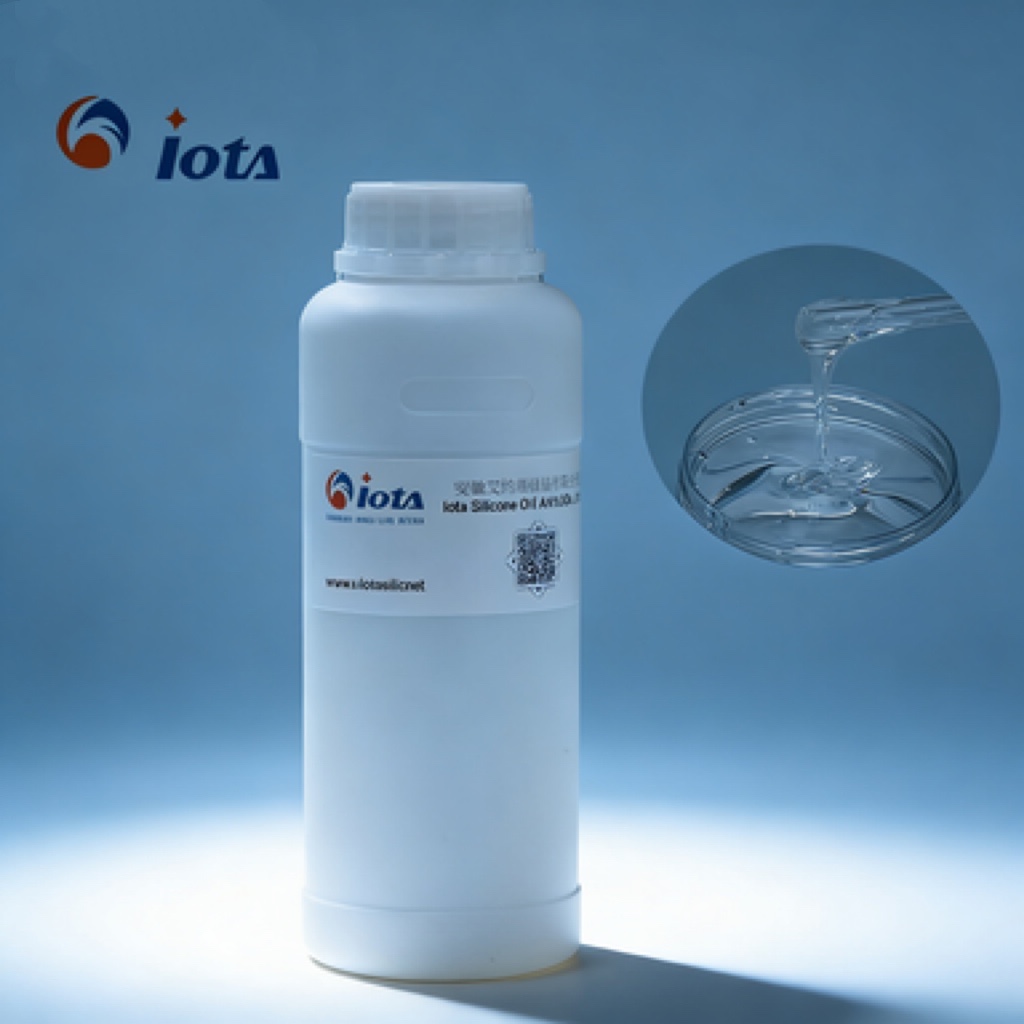
Anhui IOTA Silicone launched the IOTA-H-M1200 fluorosilicone oil, which boosts oil resistance by 300% compared to similar products and shortens the vulcanization cycle of fluorosilicone seals by 60%.
-
Hubei Xingrui Silicon Materials patented a preparation method for fluorosilicone oil with controllable fluorine content (5-70 wt%), enabling precise performance customization.
Future Outlook: Towards High Purity, Functionality, Low Carbon, and Globalization
Looking ahead, with the continuous upgrading of demand in downstream sectors such as aerospace, electronic packaging, new energy vehicles, and high-end coatings, and breakthroughs in new technologies like bio-based raw material substitution and self-healing material systems, China's fluorosilicone oil industry will further evolve towards high purification, functionalization, low carbonization, and globalization.
It is projected that by 2030, China's fluorosilicone oil market size will exceed 28 billion yuan, with an average annual compound growth rate of approximately 9.8%. The import dependence of high-end products will drop below 20%, and the output of high-purity and high-performance fluorosilicone oil will exceed 50,000 tons. The industrial cluster structure will be further optimized, forming a globally competitive supply system for functional fluorosilicone materials. This will promote the self-sufficiency of China's high-end manufacturing industry and enable domestic fluorosilicone oil to become a new "name card" for China's high-end materials to "go global".