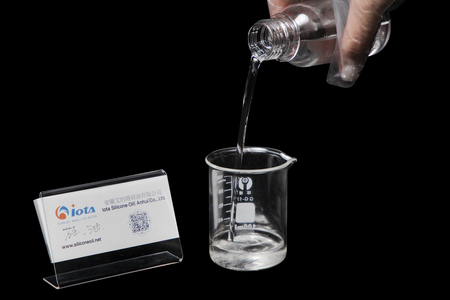
In October 2026, China's National Technical Committee for Standardization of Organosilicon Materials, together with 21 backbone production enterprises and 37 downstream end-user application units, jointly released the 2026 White Paper on Industrial Application Measurement of Hydroxyl Silicone Oil. Based on more than 6 years of long-term working condition tracking data from nearly 180 enterprises across 29 provinces and municipalities in China, this document systematically sorts out the real implementation performance of hydroxyl silicone oil in four core fields: silicone rubber structure control agents, fabric soft finishing, coating leveling modification, and electronic potting adhesives. It clarifies the performance boundaries and selection specifications of products with different hydroxyl end-capping structures, hydroxyl content ranges and viscosity grades. This industry guide, fully formed based on front-line mass production data, solves the long-standing downstream pain point of "selecting products only by nominal viscosity, leading to structural runaway and insufficient adhesion in actual production", and provides a directly implementable real reference for the stable and compliant production of the whole industry.
Industrial upgrading continues to advance, and the batch qualified rate of domestic hydroxyl silicone oil has increased to 99.7%
According to public industry statistics, the total production capacity of hydroxyl silicone oil in China has exceeded 480,000 tons in 2026. Conventional industrial-grade products have achieved full independent control, and the overall market self-sufficiency rate has reached 93%. In recent years, with the full popularization of the low-temperature continuous polymerization process, leading domestic enterprises have controlled the temperature fluctuation during the polymerization process within ±0.5℃, increased the hydroxyl end-capping rate from the previous 85% to 96%, narrowed the viscosity deviation between product batches from the previous ±10% to ±3%. The annual production capacity of a single continuous production line has exceeded 50,000 tons, and the qualified rate of finished products has stably remained above 99.7%.
In the high-end segmented product field, the molecular weight regulation accuracy of linear pure hydroxyl end-capped silicone oil has achieved free customization from 5K to 80K, the hydroxyl content control accuracy is stably within ±0.01%, and the volatile content can be controlled below 0.3%. It fully meets the customized requirements of precision scenarios such as high-end curtain wall weather-resistant sealants and medical silicone gels. The measured performance of some high-end grades has reached the advanced level of similar international products.
Measurement verification: Product selection cannot rely solely on the single indicator of nominal viscosity, and three core parameters are indispensable
This white paper has completed more than 850 groups of parallel working condition comparison tests, and finally draws a clear core conclusion: selecting products only by nominal viscosity is the top cause of downstream application failures at present. To achieve long-term stable adaptation, three core parameters must be confirmed simultaneously: hydroxyl end-capping structure type, actual effective hydroxyl content, and kinematic viscosity at 25℃. Together, they determine the reaction activity, crosslinking density and final working condition service life of the product:
-
Hydroxyl end-capping structure type: It is divided into three categories: linear double-end pure hydroxyl end-capping, side-chain hydroxyl grafting, and single-end hydroxyl end-capping. The distribution density of hydroxyl groups and the positions of reaction sites of different structures are completely different, which directly determines the subsequent reaction path of condensation reaction or hydrogen bonding, and is the first priority judgment condition for product selection.
-
Actual effective hydroxyl content: It refers to the mass proportion of hydroxyl groups with real reaction activity in every gram of product, with the unit of wt%, which directly determines the total amount of theoretical reactive sites in the system. Measured data shows that for two products with the same nominal viscosity, if the difference in the proportion of actual active hydroxyl groups is 12%, the crosslinking density of the final downstream product will differ by more than 28%.
-
Viscosity grade: The kinematic viscosity indicator tested at 25℃, which directly determines the dispersion speed, penetration uniformity of the product in the matrix and the rheological properties of the system after addition. Even if the effective hydroxyl content is exactly the same, products with different viscosities will show completely different structural control and leveling effects in actual working conditions.
All measured data in this white paper come from the continuous mass production line tracking records of downstream enterprises, completely eliminating the short-term test deviation under the ideal laboratory environment. All conclusions have been verified by actual long-term operation for at least 18 months.
Real implementation performance in different scenarios: The adaptation boundaries of different categories are clearly defined
Based on a large amount of front-line production tracking data, the adaptation and selection logic of hydroxyl silicone oil in four core downstream scenarios has been completely clarified:
-
Silicone rubber structure control agent scenarios: Prioritize grades with linear double-end pure hydroxyl end-capping structure, effective hydroxyl content of 0.2%~1.0% and viscosity in the range of 350~2000mm²/s. Such products can form stable hydrogen bonds with active groups on the surface of white carbon black, effectively inhibiting the structural hardening problem of compounded silicone rubber. The normal-temperature storage period of the rubber compound can be extended to more than 6 months, without reducing the mechanical properties of the vulcanized silicone rubber. The measured data of a large domestic silicone rubber product enterprise shows that after using such products, the re-milling time of the rubber compound is shortened by 40%, and the qualified rate of products is increased by 12%.
-
Fabric soft hydrophilic finishing scenarios: Prioritize grades with linear double-end hydroxyl end-capping structure, effective hydroxyl content of 0.5%~1.2% and viscosity in the range of 500~5000mm²/s. The softener made by emulsifying such products can form a uniform organosilicon elastic film on the fiber surface, and the hydroxyl groups form chemical bonds with the active groups on the fiber surface. The treated pure cotton fabric not only has excellent smooth and fluffy hand feel, but also maintains good hydrophilicity. The softness retention rate can still reach more than 90% after 100 washes. The measured data of a domestic textile industrial cluster shows that after using such products, the wrinkle resistance of the fabric is increased by 45%, and the electrostatic voltage is reduced by 80%.
-
Coating and ink leveling modification scenarios: Prioritize grades with linear hydroxyl end-capped low-viscosity structure, effective hydroxyl content of 1.0%~2.0% and viscosity in the range of 50~350mm²/s. Such products can spread quickly and uniformly in solvent-based and water-based coating systems, reduce the surface tension of the system, and effectively eliminate the shrinkage cavity and orange peel problems of the paint film. At the same time, the hydroxyl groups can participate in the crosslinking reaction of the coating resin, avoiding the common defect of interlayer adhesion decline that often occurs with ordinary methyl silicone oil. The measured data of a domestic coating enterprise shows that for industrial paints added with such products, the number of friction resistance times on the paint film surface is increased by 2 times, and the leveling time is shortened by 60%.
-
High-end electronic potting adhesive base polymer scenarios: Prioritize electronic-grade grades with high-purity linear double-end hydroxyl end-capping structure, effective hydroxyl content of 0.08%~0.5% and viscosity in the range of 10000~80000mm²/s. The impurity ion content of such products is strictly controlled at the ppm level, and the volatile content of small molecules is lower than 0.3%. When used as the base polymer of room-temperature vulcanized silicone rubber, the thermal shock resistance of the cured colloid is increased by 35%, and the dielectric breakdown strength can reach more than 22kV/mm, which is widely used in precision potting scenarios such as sensors and semiconductors.
The white paper also clearly marks the red lines for product selection in different scenarios: side-chain hydroxyl grafted high-viscosity grades must not be used in silicone rubber structure control agent scenarios, otherwise the crosslinking density of the rubber compound will be uneven, and the elasticity after vulcanization will be greatly reduced; high-viscosity and high-hydroxyl content grades must not be used in coating leveling scenarios, otherwise problems such as insufficient system compatibility and increased haze of the paint film will occur.
Common pitfalls avoidance guidelines for industry applications
Based on a large number of real working condition feedbacks, the white paper sorts out several typical misunderstandings that are most likely to occur in current downstream applications:
-
Never mix the product selection logic of different structure types: The reaction mechanisms of linear double-end pure hydroxyl, side-chain hydroxyl grafting and single-end hydroxyl end-capping are completely different. Even if the nominal hydroxyl content and viscosity values are exactly the same, they cannot be directly used across scenarios.
-
Do not only look at the nominal viscosity while ignoring the proportion of effective active hydroxyl groups: Some low-end products have problems such as low hydroxyl end-capping rate and high proportion of inert components. The nominal viscosity meets the standard, but the actual effective active hydroxyl groups participating in the reaction are insufficient, which will eventually lead to insufficient conversion rate of downstream reactions, and the product performance is far below the design requirements.
-
High-viscosity grades cannot be arbitrarily diluted with solvent to replace low-viscosity products: The dilution process cannot change the absolute content distribution of effective active hydroxyl groups, and will introduce a large number of low-boiling impurities, directly destroying the leveling characteristics of the coating system, leading to secondary defects such as pinholes and bubbles in the paint film.
-
Ordinary industrial-grade hydroxyl silicone oil must not be directly used in electronic-grade sealing scenarios: The free metal ions and small molecule cyclic residue indicators of ordinary industrial-grade products completely fail to meet the requirements of electronic scenarios. Direct use will lead to the decline of insulation performance of electronic components and bring hidden dangers to long-term operation reliability.
FAQ
Q: Which type of hydroxyl silicone oil is most suitable for the structure control of white carbon black in ordinary compounded silicone rubber?
A: Prioritize refined grades with linear double-end pure hydroxyl end-capping structure, effective hydroxyl content of 0.2%~1.0% and viscosity in the range of 350~2000mm²/s. This is the golden adaptation combination that has been verified by a large number of long-term working conditions in the silicone rubber industry, which can effectively inhibit the structural hardening of the rubber compound without losing the mechanical properties of the product.
Q: The haze of the paint film increases after adding hydroxyl silicone oil. What is the most likely cause?
A: It is most likely that a side-chain hydroxyl grafted grade with excessively high viscosity and too high hydroxyl content is selected. Such products have insufficient compatibility with the coating system, and are prone to microscopic phase separation after addition, resulting in the decrease of paint film transparency. This problem can be solved by replacing it with an adapted low-viscosity linear double-end hydroxyl end-capping grade.
Q: What impact will the deviation between the actual effective hydroxyl content and the nominal value of hydroxyl silicone oil have on the curing of room-temperature vulcanized silicone rubber?
A: The deviation of effective hydroxyl content will directly cause the crosslinking density of the system to deviate from the design value, and finally lead to a series of problems such as slower curing speed, insufficient colloid hardness and decreased sealing performance. It is necessary to check the measured test report of effective active hydroxyl groups for each batch when purchasing raw materials.
Q: Can high-viscosity hydroxyl silicone oil for textiles directly replace low-viscosity grades as coating leveling agents?
A: It cannot be used directly across scenarios. The molecular chain length of high-viscosity hydroxyl silicone oil commonly used in textile scenarios is much longer than that of the adapted grades for coating leveling scenarios. Direct use will lead to insufficient system compatibility, which not only fails to achieve the leveling effect, but also destroys the transparency and surface flatness of the paint film.
Q: Which has higher priority during product selection, hydroxyl end-capping structure type or effective hydroxyl content?
A: The hydroxyl end-capping structure type has higher priority, which directly determines the core reaction mechanism of the product and the basic characteristics of the final crosslinked product, and is the first premise of product selection. The effective hydroxyl content and viscosity are the core parameters to further match the reaction speed of specific working conditions and processing performance requirements after the structure type is determined.