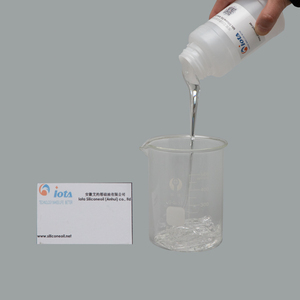
In October 2026, China's Domestic Organosilicon Industry Association, together with 17 backbone production enterprises and 23 downstream end-user application units, jointly released the 2026 White Paper on Industrial Application Measurement of Hydrogen-Containing Silicone Oil. Based on more than 5 years of long-term working condition tracking data from nearly 150 enterprises across 31 provinces and municipalities in China, this document systematically sorts out the real implementation performance of hydrogen-containing silicone oil in four core fields: textile waterproofing, addition-cure silicone rubber, polyether modification synthesis, and new energy sealing. It clarifies the performance boundaries and selection specifications of products with different hydrogen-containing structure types, hydrogen content ranges and viscosity grades. This industry guide, fully formed based on front-line mass production data, solves the long-standing downstream pain point of "selecting products only by nominal hydrogen content, leading to crosslinking runaway and excessive residues in actual production", and provides a directly implementable real reference for the stable and compliant production of the whole industry.
Industrial upgrading continues to advance, and the qualified rate of domestic continuous production lines has increased to 99.8%
According to public industry statistics, the total production capacity of hydrogen-containing silicone oil in China has exceeded 420,000 tons in 2026. Conventional industrial-grade products have achieved full independent control, and the overall market self-sufficiency rate has reached 91%. In recent years, with the full popularization of the continuous hydrolysis and equilibration process, leading domestic enterprises have controlled the pH fluctuation during production within ±0.2, reduced the gradient deviation of reaction temperature to ±1℃, narrowed the hydrogen content deviation between product batches from the previous ±0.05% to ±0.01%. The daily production capacity of continuous production lines has exceeded 10 tons, and the qualified rate of finished products has stably remained above 99.8%.
In the high-end segmented product field, the molecular weight regulation accuracy of terminal hydrogen-containing silicone oil has achieved free customization from 4K to 50K, the hydrogen content control accuracy is stably within ±0.002%, and the PDI value can be controlled below 1.1. It fully meets the customized requirements of precision scenarios such as 5G base station sealants and medical coatings for artificial blood vessels. The measured performance of some high-end grades has reached the advanced level of similar international products.
Measurement verification: Product selection cannot rely solely on the single indicator of nominal hydrogen content, and three core parameters are indispensable
This white paper has completed more than 720 groups of parallel working condition comparison tests, and finally draws a clear core conclusion: selecting products only by nominal hydrogen content is the top cause of downstream application failures at present. To achieve long-term stable adaptation, three core parameters must be confirmed simultaneously: molecular structure type, actual effective hydrogen content, and kinematic viscosity at 25℃. Together, they determine the reaction activity, crosslinking density and final working condition service life of the product:
-
Molecular structure type: It is divided into three categories: high-hydrogen fully side-hydrogen structure, low-hydrogen side-terminal composite hydrogen-containing structure, and terminal active hydrogen end-capping structure. The distribution density of Si-H bonds and the positions of reaction sites of different structures are completely different, which directly determines the subsequent reaction path of hydrosilylation or hydrolysis film formation, and is the first priority judgment condition for product selection.
-
Actual effective hydrogen content: It refers to the mass proportion of Si-H bonds with real reaction activity in every gram of product, with the unit of wt%, which directly determines the total amount of theoretical reactive sites in the system. Measured data shows that for two products with the same nominal hydrogen content, if the difference in the proportion of actual active hydrogen is 10%, the crosslinking density of the final downstream product will differ by more than 25%.
-
Viscosity grade: The kinematic viscosity indicator tested at 25℃, which directly determines the penetration speed, dispersion uniformity of the product in the matrix and the rheological properties of the system after addition. Even if the effective hydrogen content is exactly the same, products with different viscosities will show completely different film-forming and reaction effects in actual working conditions.
All measured data in this white paper come from the continuous mass production line tracking records of downstream enterprises, completely eliminating the short-term test deviation under the ideal laboratory environment. All conclusions have been verified by actual long-term operation for at least 12 months.
Real implementation performance in different scenarios: The adaptation boundaries of different categories are clearly defined
Based on a large amount of front-line production tracking data, the adaptation and selection logic of hydrogen-containing silicone oil in four core downstream scenarios has been completely clarified:
-
Textile waterproof finishing scenarios: Prioritize grades with fully side-hydrogen high-hydrogen structure, effective hydrogen content of 1.5%~1.8% and viscosity in the range of 20~50mm²/s. Such products can complete low-temperature crosslinking at -20℃, forming a dense hydrophobic protective film with a thickness of 0.5~3μm on the fiber surface. The water pressure resistance value of the treated outdoor jacket fabric can exceed 20000mm, the virus blocking rate of medical protective clothing reaches 99.9%, and the air permeability is more than 3 times higher than that of traditional waterproof agents. The measured data of a large domestic outdoor product enterprise shows that after using such products, the antifouling performance of the fabric is increased by 300%, and the subsequent detergent consumption is reduced by 70%.
-
Crosslinking agent scenarios for addition-cure liquid silicone rubber: Prioritize grades with side-terminal composite hydrogen low-hydrogen structure, effective hydrogen content of 0.1%~0.9% and viscosity in the range of 10~200mm²/s. The crosslinking density of such products can be stably controlled at 8×10²⁰/cm³. When used together with vinyl silicone oil, the tensile strength, tear strength and resilience of the vulcanized rubber can be precisely regulated, which is widely used in the mass production of mother and baby products and food-grade silicone rubber products. Measurement and verification show that the production cost of automotive silicone rubber seals using such products is reduced by 25%, and the service life of the products is extended by 3 times.
-
Polyether/epoxy modified silicone oil synthesis scenarios: Prioritize customized grades with terminal active hydrogen end-capping structure, hydrogen content accuracy of ±0.002% and viscosity in the range of 50~500mm²/s. Such products can precisely control the molecular chain length of block copolymerization. After grafting polyether segments, the surface tension of the product can be reduced to 20mN/m, the pesticide atomization efficiency is increased by 50%, and the makeup holding time of cosmetics exceeds 18 hours. The measured data of a domestic agrochemical auxiliary enterprise shows that after using such modified products, the adhesion rate of pesticides on crop leaves increases from 40% to 85%.
-
New energy electronic sealing scenarios: Prioritize electronic-grade grades with refined low-impurity low-hydrogen structure, effective hydrogen content of 0.2%~0.6% and viscosity in the range of 50~300mm²/s. The residual platinum catalyst content of such products is lower than 5ppm, and the volatile content of small molecules is strictly controlled below 0.5%. After being added to the 5G base station sealant, the signal transmission loss is reduced by 40%, and the long-term operation reliability of the seal is greatly improved.
The white paper also clearly marks the red lines for product selection in different scenarios: high-hydrogen grades must not be used in textile waterproof scenarios, otherwise there will be problems such as insufficient crosslinking density and poor water resistance of the waterproof film; high-hydrogen and high-viscosity grades must not be used in addition-cure silicone rubber scenarios, otherwise serious quality problems such as excessively fast reaction speed, uneven vulcanization and residual bubbles inside the product will occur.
Common pitfalls avoidance guidelines for industry applications
Based on a large number of real working condition feedbacks, the white paper sorts out several typical misunderstandings that are most likely to occur in current downstream applications:
-
Never mix the product selection logic of different structure types: The reaction mechanisms of high-hydrogen fully side-hydrogen, low-hydrogen side-terminal composite hydrogen and terminal active hydrogen are completely different. Even if the nominal hydrogen content and viscosity values are exactly the same, they cannot be directly used across scenarios.
-
Do not only look at the nominal hydrogen content while ignoring the proportion of effective active hydrogen: Some low-end products have problems such as poor stability of Si-H bonds and high proportion of invalid inert components. The nominal hydrogen content meets the standard, but the actual effective active hydrogen participating in the reaction is insufficient, which will eventually lead to insufficient conversion rate of downstream reactions, and the product performance is far below the design requirements.
-
High-hydrogen grades cannot be arbitrarily diluted with ordinary methyl silicone oil to replace low-hydrogen products: The dilution process cannot change the absolute content distribution of effective active hydrogen, and will introduce a large number of non-active inert components, directly destroying the reaction balance of the downstream crosslinking system, resulting in a significant decrease in the mechanical properties of the product.
-
Ordinary industrial-grade hydrogen-containing silicone oil must not be directly used in food contact and medical-grade scenarios: The small molecule cyclic residue and impurity ion content of ordinary industrial-grade products completely fail to meet the food contact safety specification requirements, and direct use will bring serious compliance and safety risks.
FAQ
Q: Which type of hydrogen-containing silicone oil is most suitable for waterproof finishing of ordinary outdoor jacket fabrics?
A: Prioritize refined grades with fully side-hydrogen high-hydrogen structure, effective hydrogen content of 1.5%~1.8% and viscosity in the range of 20~50mm²/s. This is the golden adaptation combination that has been verified by a large number of long-term working conditions in the textile waterproof industry, which can fully meet the requirements of high water pressure resistance and high air permeability.
Q: Bubbles appear inside the addition-cure silicone rubber after vulcanization. Which indicator of hydrogen-containing silicone oil is most likely related to this problem?
A: It is most likely that a grade with excessively high hydrogen content or mismatched viscosity is selected. A large amount of hydrogen is released in a short time during the reaction process, which cannot escape smoothly from the rubber system, and finally forms residual bubbles inside the product. This problem can be solved by replacing the matching grade and optimizing the addition ratio.
Q: What impact will the deviation between the actual effective hydrogen content and the nominal value of hydrogen-containing silicone oil have on polyether modification synthesis?
A: The deviation of effective hydrogen content will directly cause the conversion rate of hydrosilylation reaction to deviate from the design value, resulting in large fluctuations in the surface tension and spreading performance of the final modified product, and the performance consistency of each batch of products cannot be guaranteed. It is necessary to check the measured test report of effective active hydrogen for each batch when purchasing raw materials.
Q: Can high-hydrogen silicone oil for textiles directly replace low-hydrogen grades as crosslinking agents for addition-cure silicone rubber?
A: It cannot be directly used across scenarios. The Si-H bond density of high-hydrogen fully side-hydrogen grades commonly used in textile scenarios is much higher than the design requirements of crosslinking agents. Direct use will lead to excessively high crosslinking density, excessive hardness of vulcanized rubber and severe decline in elasticity, which completely cannot meet the performance requirements of silicone rubber products.
Q: Which has higher priority during product selection, molecular structure type or effective hydrogen content?
A: The molecular structure type has higher priority, which directly determines the core reaction path of the product and the basic characteristics of the final crosslinked film formation, and is the first premise of product selection. The effective hydrogen content and viscosity are the core parameters to further match the reaction speed of specific working conditions and processing performance requirements after the structure type is determined.