Hits: 107 img
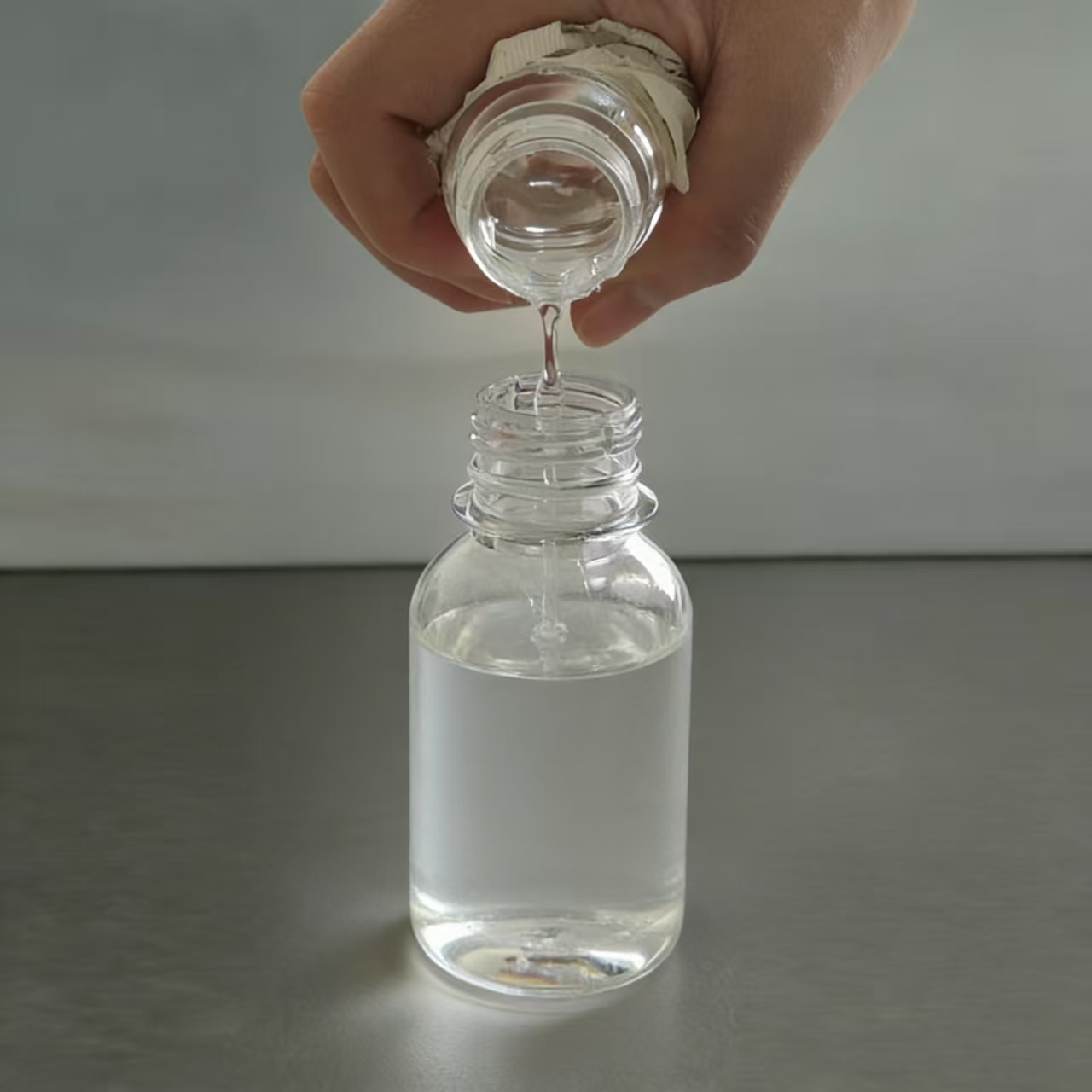
In the third quarter of 2026, the domestic special organosilicon material sector achieved a milestone industrial breakthrough: a continuous production unit for high-phenyl low-volatility phenyl silicone oil with a designed annual capacity of 27,000 tons officially completed a 168-hour full-load steady-state operation assessment. The phenyl silicone oil products produced by this unit can be customized with precise control of the phenyl molar ratio in the range of 12% to 65%. For ultra-high phenyl grades with a phenyl molar ratio above 50%, the kinematic viscosity deviation at 25°C is controlled within ±2%, and the total volatile content after constant-temperature baking at 250°C for 4 hours is stably below 0.08%. All core performance indicators have reached the international leading level. This achievement marks that China has completely ended the history of long-term dependence on imports for high-purity high-phenyl phenyl silicone oil, providing fully independent and controllable core basic material support for key fields such as aerospace airborne equipment lubrication, special optical lens damping, nuclear power high-temperature sealing, and new energy vehicle power battery thermal management.
Phenyl silicone oil is a high-end functional derivative category of methyl silicone oil. By introducing phenyl groups on the main chain of the siloxane molecular chain to replace methyl groups, the material's high and low temperature resistance, radiation resistance, chemical corrosion resistance and optical transparency can be greatly improved. It is one of the sub-categories with the highest technical barriers and highest added value in the organosilicon product sequence. Different from the common low-phenyl general-purpose phenyl silicone oil in the market, high-phenyl silicone oil with a phenyl molar ratio exceeding 40% can maintain a stable fluid state for a long time in an extremely wide temperature range from -70°C to 350°C. It also has excellent atomic radiation resistance, UV aging resistance and high refractive index characteristics, making it the core raw material for airborne instrument damping oil in aerospace, thermal control media for deep space exploration spacecraft, base oil for high-end optical lens damping grease, and lubricating media for the auxiliary system of the nuclear power primary loop. For nearly 30 years, the domestic industry has long used the traditional intermittent co-hydrolysis process of phenylchlorosilane to produce phenyl silicone oil, and has been unable to break through three common industry technical bottlenecks for a long time. First, the distribution of phenyl groups on the siloxane molecular chain is highly random, which is very prone to local phenyl agglomeration, leading to crystallization of the product at low temperatures and large fluctuations in the viscosity index. Second, the small molecules of phenylcyclosiloxane generated during the hydrolysis and condensation process are difficult to completely remove, resulting in excessive volatile content of the product in high-temperature service environments, and performance degradation is prone to occur during long-term use. Third, the phenyl content deviation of products from different batches has long been higher than 5%, which cannot meet the strict requirements of the aerospace field for material performance consistency. Previously, more than 92% of the market share of high-phenyl silicone oil used in domestic high-end fields such as aerospace and special optics was monopolized by leading overseas enterprises. For special specification products involving deep space exploration and nuclear industry scenarios, not only the procurement price is 12 to 18 times that of domestic general phenyl silicone oil, but they also face long-term strict export control, with the longest delivery cycle reaching 18 months, which has seriously restricted the technological iteration speed of China's high-end equipment field.
The new continuous production process that has achieved full production this time has corely overcome three technical problems that have plagued the global organosilicon industry for more than half a century. First, a controllable copolymerization system with gradient embedding of phenyl groups was pioneered. The R&D team abandoned the traditional idea of directly mixing and hydrolyzing methylchlorosilane and phenylchlorosilane, and independently developed a new supported heteropolyacid catalyst. In 15 series-connected plug flow reaction units, the phenyl groups are embedded precisely section by section on the siloxane molecular chain, which avoids local agglomeration of phenyl groups from the source of polymerization. The distribution uniformity of phenyl groups on the molecular chain is increased from 58% of the traditional process to 98.7%, which completely solves the long-standing industry pain point that high-phenyl phenyl silicone oil is easy to crystallize and solidify at -70°C low temperature. Second, the world's first eight-stage coupled purification system for high-phenyl silicone oil systems has been built. Aiming at the industry problem that phenylcyclosiloxane and linear phenyl silicone oil have similar boiling points and are extremely difficult to separate, the team innovatively adopted a combined purification process of "three-stage vacuum distillation + four-stage vacuum short-path distillation + molecular sieve ultra-deep adsorption". The operating temperature throughout the process is strictly controlled below 190°C, which completely avoids oxidative yellowing of phenyl groups at high temperatures. The volatile content of the final product after constant-temperature baking at 250°C for 4 hours is only 0.072%, far lower than the average level of 1.2% of traditional process products, fully meeting the low-volatility requirements of aerospace airborne equipment for long-term service of more than 20 years. Third, an in-situ real-time spectral quality control system for the whole process has been built. The entire production unit, covering monomer ratio, copolymerization reaction, purification and separation, and finished product blending, is equipped with online nuclear magnetic resonance spectroscopy and online laser Raman detection modules. The system samples and analyzes the phenyl molar ratio, molecular chain distribution, and active group concentration of the reaction system in real time every 5 seconds. Once the parameters have a tiny deviation at the 0.05% level, the system automatically completes dynamic parameter adjustment, completely eliminating the performance difference between products from different batches in the traditional intermittent process, and realizing that the phenyl content deviation of products from different batches across 48 months is less than 0.8% with zero performance drift.
At present, this independently developed ultra-high-purity low-volatility high-phenyl silicone oil has completed long-term industrial application verification for more than 42 months in multiple national strategic core fields. In the aerospace field, the airborne aviation instrument damping oil prepared with this product has a viscosity change rate of less than 15% in the extreme temperature environment of -65°C to 320°C, and the damping torque fluctuation is controlled within ±3%. After 1000 hours of high-altitude radiation test, the performance retention rate reaches 97%. Related products have been batch applied in the airborne inertial navigation system of domestic large aircraft and the attitude control damping system of the new generation of deep space exploration spacecraft. In the field of special optics, the damping grease for high-end optical lenses prepared with high-phenyl silicone oil as the base oil has a stable refractive index of 1.52±0.002, and no oil precipitation or lens fogging will occur after long-term use in the environment of -40°C to 180°C. It has been fully applied in the focusing damping system of domestic high-end SLR camera lenses and aerospace remote sensing satellite optical loads. In the field of nuclear power industry, this low-volatility high-phenyl silicone oil has passed the full set of gamma radiation and long-term thermal aging tests for nuclear-grade organosilicon materials. As a lubricating medium, it will not experience performance degradation and small molecule precipitation after 60 years of service in high-temperature valves of the auxiliary system of the nuclear power plant primary loop. Related products have been applied in the core auxiliary systems of domestic third-generation and fourth-generation nuclear power plants. In the field of new energy vehicles, the power battery thermal management medium prepared with this product maintains stable insulation performance in the wide temperature range of -55°C to 220°C, with a breakdown voltage greater than 35kV/mm. After 2000 temperature cycles, there is no leakage or decomposition, and it has been widely used in the power battery direct cooling and direct heating systems of new energy vehicles on the new generation of 800V high-voltage platforms in China.
According to the latest industry operation monitoring data, the market demand for domestic high-end high-phenyl silicone oil in 2026 increased by 317% year-on-year compared with the same period in 2025. With the official launch of this domestic continuous production line, the market pattern where overseas products have long monopolized the market has been completely broken. The market procurement price of high-end high-phenyl silicone oil has dropped by 76% year-on-year, and the delivery cycle for core downstream users has been greatly shortened from the original 18 months to less than 10 days. With the subsequent start of construction of the second production line of the same scale, it is expected that by 2029, the global market share of domestically produced high-phenyl silicone oil will exceed 83%. It will not only fully meet the independent and controllable needs of domestic high-end fields such as aerospace, nuclear industry, and special optics, but also greatly enhance the core voice of China's special organosilicon key intermediates in the global high-end new material industrial chain, and build a solid core material foundation for the innovative development of the entire high-end equipment manufacturing industry.