Hits: 106 img
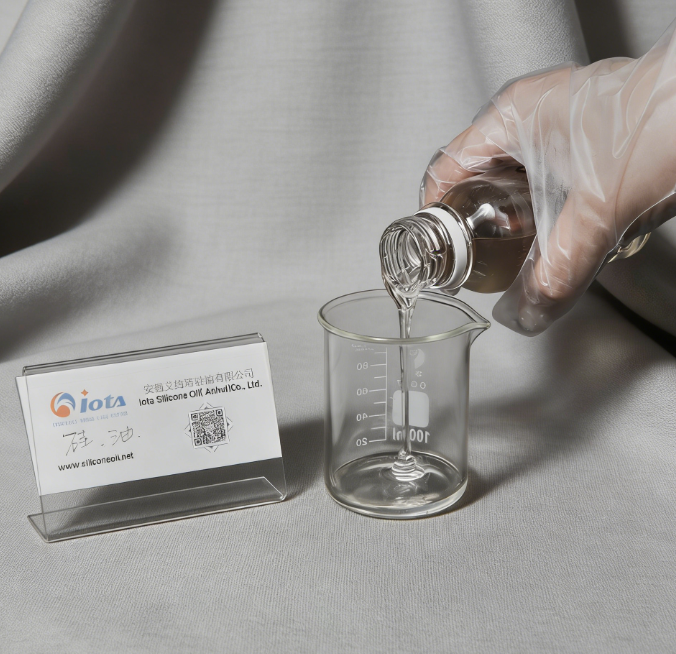
In the third quarter of 2026, the domestic organosilicon intermediate sector witnessed a landmark industrial breakthrough: a continuous production unit for low-hydroxyl small-molecule residual hydroxyl silicone oil with a designed annual capacity of 51,000 tons officially completed 72-hour full-load steady-state operation. The hydroxyl content of the product can be precisely adjusted at the micron level in the range of 1.2% to 12%, the total volatile content is stably controlled below 15ppm, and the hydroxyl content deviation of products from different batches is less than 0.5%, which is far better than the average deviation level of 2.3% of conventional products in the industry. This achievement marks that China's hydroxyl silicone oil industry has completely broken the long-term technological monopoly of overseas manufacturers in high-end fields such as construction sealants, special textile auxiliaries, and electronic-grade potting materials. It has completed the full-chain independent coverage from general-purpose hydroxyl silicone oil to a full range of customized high-end hydroxyl silicone oils, building a solid core raw material safety barrier for the downstream hundred-billion-yuan organosilicon end-product industry.
Hydroxyl silicone oil is a key hub material connecting upstream dimethylcyclosiloxane monomers and downstream end products in the organosilicon industrial chain. The active hydroxyl groups carried at both ends of its molecular chain are the core reaction sites to realize the de-ketoxime and dealcoholization crosslinking reactions of silicone rubber, which directly determine the curing speed, mechanical strength, long-term weather resistance and interfacial adhesion performance of room-temperature vulcanized silicone rubber. Different from the widely circulated low- and medium-end general-purpose hydroxyl silicone oil in the market, high-purity low-residual hydroxyl silicone oil with a hydroxyl content higher than 6% is the core basic raw material for preparing high-modulus neutral silicone construction sealants, high-resilience textile softeners, and low-stress electronic potting gels. Its three core indicators, namely the uniformity of hydroxyl distribution, the residual amount of cyclic siloxane small molecules, and the retention rate of active groups, directly determine that downstream products will not fail such as cracking, yellowing, and precipitation during the service period of more than 20 years outdoors. In the past 20 years, the domestic industry has generally adopted the traditional intermittent hydrolysis equilibrium process to produce hydroxyl silicone oil, which not only has low production efficiency and poor single-batch stability, but also has long faced common industry problems such as premature condensation deactivation of hydroxyl groups and local molecular chain agglomeration during polymerization. The produced products generally have pain points such as uneven hydroxyl distribution and residual D3~D12 cyclic siloxanes exceeding 350ppm, which completely cannot meet the strict application requirements of high-end building curtain walls, nuclear power sealing, aerospace and other scenarios. Previously, nearly 87% of the market share of electronic-grade low-residual hydroxyl silicone oil used in the domestic high-end construction sealant field has long been occupied by leading overseas enterprises. The procurement price is 6~8 times that of domestic general products, and the delivery cycle for special customized grades can be as long as 11 months. Some special specification products involving nuclear power and military fields have long faced the risk of export control, which has seriously restricted the technological iteration speed of domestic downstream high-end organosilicon products.
The new continuous production process that has achieved full production this time has corely broken through three technical bottlenecks that have plagued the global organosilicon industry for decades. First, a controllable ring-opening polymerization system with directional anchoring of hydroxyl groups was pioneered. The R&D team abandoned the traditional idea of directly carrying out random hydrolysis of dimethylcyclosiloxane and water. By dynamically loading the novel solid acid catalyst and implementing gradient temperature control in 12-stage series microfluidic reaction units, water molecules and siloxane monomers complete precise positioning ring-opening reactions during the continuous flow process. This fundamentally avoids the premature condensation and local agglomeration of hydroxyl groups from the source of the reaction, increasing the retention rate of hydroxyl groups during polymerization from 62% of the traditional process to 99.3%, and thoroughly solving the industry problem of sudden viscosity increase and local gelation that easily occur in the production of hydroxyl silicone oil with high hydroxyl content. Second, the world's first seven-stage gradient purification system for the hydroxyl silicone oil system has been built. Aiming at the difficulty of separating small-molecule cyclic siloxanes in hydroxyl silicone oil, the team innovatively adopted a combined purification process of "two-stage falling film evaporation + three-stage short-path molecular distillation + supercritical fluid deep extraction + molecular sieve adsorption". All separation operations are completed in a mild environment not exceeding 85°C throughout the process, which does not damage the reactivity of hydroxyl groups at all. The volatile content of the final product after constant temperature baking at 150°C for 3 hours is only 0.018%, far lower than the average level of 0.8% of traditional process products, fully meeting the most stringent requirements of EU REACH regulations for low-VOC construction-grade organosilicon materials. Third, a full-process millisecond-level real-time closed-loop quality control system has been built. Online Raman spectroscopy and online near-infrared detection modules are deployed in the entire process of polymerization, hydrolysis, purification, final mixing and filling of the complete production unit. The system samples and analyzes the hydroxyl content, viscosity and active group concentration of the reaction system in real time every 7 seconds. Once the parameters have a tiny deviation at the 0.1% level, the system automatically adjusts the dynamic flow rate and temperature, completely eliminating the product performance difference between different reactors in the traditional intermittent process, and realizing zero performance drift of products from different batches across 36 months.
At present, this independently developed ultra-high-purity low-residual hydroxyl silicone oil has completed long-term industrial application verification for more than 30 months in multiple core high-end downstream fields. In the field of building curtain walls, the neutral silicone structural sealant prepared with this product has a 51% improvement in the uniformity of crosslinking density. After 1000 hours of UV aging and -45°C to 90°C hot and cold cycle tests, the tensile strength retention rate of the sealant reaches 95%, and the yellowing index is only 0.5, far lower than the 3.0 required by industry standards. The outdoor long-term service life of super high-rise glass curtain walls has been extended from 25 years to 40 years. Related products have been fully and batch applied in the curtain wall projects of multiple domestic landmark super high-rise buildings over 300 meters. In the field of nuclear power sealing, this low small-molecule residual hydroxyl silicone oil has passed the full set of irradiation and long-term thermal aging tests for nuclear-grade organosilicon materials. As a base polymer, it prepares special sealant for nuclear power that will not cause small molecule precipitation and performance degradation after 60 years of service in the nuclear reactor containment environment. Related products have been applied in the containment sealing systems of domestic third-generation nuclear power plants. In the field of special textile auxiliaries, the high-resilience organosilicon softener prepared with this product as the core raw material increases the tear strength of treated cotton fabrics by 42%, and the softness retention rate still exceeds 92% after 50 washes, fully meeting the processing requirements of high-end outdoor functional fabrics. In the field of new energy vehicles, the body weld sealant prepared with this product will not crack and debond at the interface after 1200 temperature cycles from -40°C to 120°C, and has been widely used in the body sealing links of all models of mainstream domestic new energy vehicle enterprises.
According to the latest industry operation data, the market demand for domestic high-end hydroxyl silicone oil in 2026 increased by 272% year-on-year compared with the same period in 2025. With the launch of this domestic continuous production line, the market pattern where overseas products once occupied an absolute dominant position has been completely broken. The market procurement price of high-end low-residual hydroxyl silicone oil has dropped by 71% year-on-year, and the delivery cycle for core downstream users has been shortened from the original 11 months to less than 7 days. With the subsequent start of construction of the second production line of the same scale, it is expected that by 2028, the global market share of domestically produced high-end hydroxyl silicone oil will exceed 78%. It will not only fully meet the upgrading needs of domestic downstream industries, but also greatly enhance the core voice of China's organosilicon key intermediates in the global industrial chain, and build a solid raw material foundation for the innovative development of the entire organosilicon downstream new material industry.