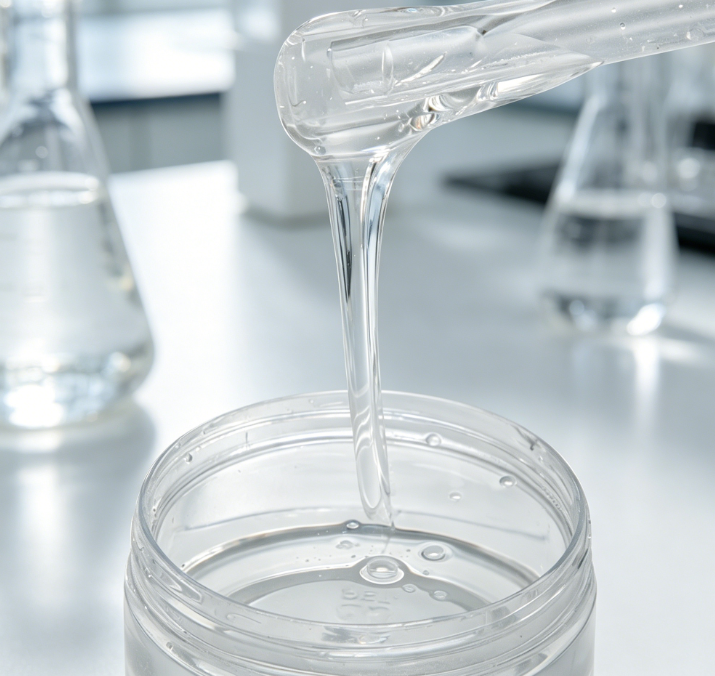
Ethyl Silicone Oil‘s Quiet Rise in Personal Care and Pharmaceuticals: From Industrial Raw Material to Consumption Upgrade Enabler
In 2026, as consumer perceptions of “silicone-free” personal care products undergo rational rethinking, and as demand for functional excipients in pharmaceutical formulations increases,
ethyl silicone oil—with its lighter skin feel, superior chemical stability, and application potential in drug delivery systems—is quietly becoming the new favorite in cosmetics and pharmaceuticals.
Over the past decade, “silicone-free” has been a marketing buzzword for shampoos and skincare products, as traditional methyl silicone oil faced consumer skepticism about residue on the scalp and skin. However, as consumer education deepens and product technologies advance, the market is shifting from “fear of silicones” to “rational use of silicones.” Against this backdrop, ethyl silicone oil is gradually gaining favor from cosmetic formulators and pharmaceutical scientists due to its differentiated performance relative to methyl silicone oil.
Cosmetics: Delivering a “Luxury” Sensory Experience
The advantages of ethyl silicone oil in personal care products are primarily reflected in the following areas:
Skin Feel Optimization: Compared to methyl silicone oil, ethyl silicone oil has shorter molecular chains and lower surface tension, enabling better spreading on skin and hair, faster evaporation, and no “false slip” or oily residue. This makes ethyl silicone oil an ideal ingredient for high-end skincare products, primers, and sunscreens, providing a silky application feel while achieving a fresh, non-greasy user experience.
Improved Stability: Ethyl silicone oil‘s chemical inertness exceeds that of methyl silicone oil, making it less likely to react with other ingredients in complex formulations, thus extending product shelf life. For high-end skincare products containing active ingredients (such as vitamin C, retinol, etc., which are prone to oxidation), ethyl silicone oil can act as a “protective barrier,” isolating water and air and slowing active ingredient degradation.
Enhanced Gloss: In color cosmetics, ethyl silicone oil is used in lipsticks, liquid foundations, eyeshadows, and other formulations, imparting excellent gloss and smooth spreadability without causing pigment migration or clumping.
Market data indicates that the global cosmetic-grade silicone market was approximately USD 2.5 billion in 2025, with personal care silicone oils accounting for over 40% of that figure. As the middle class rises across the Asia-Pacific region and consumption upgrade trends continue, this market is expected to expand at an annual rate of 5-6%.
Pharmaceuticals: A New Choice for Functional Excipients
In pharmaceutical formulations, although the application of ethyl silicone oil started relatively late, it is growing rapidly. Key application areas include:
Drug Delivery Systems: Ethyl silicone oil‘s hydrophobicity and bioinertness make it an ideal excipient for oral sustained-release formulations and transdermal patches. By dispersing or dissolving active pharmaceutical ingredients (APIs) in ethyl silicone oil, oil-based capsules or emulsions can be prepared to achieve sustained drug release in vivo, prolonging therapeutic effect duration and reducing dosing frequency.
Medical Device Lubrication: In the production of syringes, catheters, and other medical devices, ethyl silicone oil is used as an internal lubricious coating, ensuring smooth plunger movement and reducing tissue damage. Compared to methyl silicone oil, ethyl silicone oil offers higher thermal stability, maintaining lubricating performance even after steam or radiation sterilization.
Controlled-Release Coating Materials: Ethyl silicone oil emulsions can serve as controlled-release coating materials for tablets and capsules, modulating drug release rates in the gastrointestinal tract. Their release mechanism relies primarily on differences in drug solubility in ethyl silicone oil and diffusion rate control, rather than pH-dependent release, making them unaffected by variations in patients‘ GI pH.
Regulation and Certification: Barriers and Opportunities
Medical-grade ethyl silicone oil production must meet strict quality standards and regulatory requirements. In China, pharmaceutical excipients require registration or filing with the National Medical Products Administration (NMPA); internationally, they must comply with USP, Ph. Eur., or JP standards.
Currently, few domestic enterprises can produce medical-grade ethyl silicone oil at scale, with the market primarily supplied by foreign companies. This presents an import substitution opportunity for domestic organosilicon enterprises with technological capability. As domestic medical-grade silicone oil continues to improve in biocompatibility, purity, and batch-to-batch consistency, the market penetration rate of domestic medical-grade ethyl silicone oil is expected to increase from less than 20% to over 40% within three years.
Rational Rethinking: Ethyl Silicone Oil Benefiting from the “Science-Based Silicone Use” Trend
From “silicone-free” prejudice to “science-based silicone use” rationality, the evolution of consumer perception is reshaping raw material selection logic in personal care and pharmaceuticals. With its unique performance advantages, ethyl silicone oil is riding the tailwind of this shift.
In cosmetics, brands no longer simply use “silicone-free” as a selling point but instead focus more on formulation science and holistic user experience optimization. This has led to growing recognition from formulators for ethyl silicone oil, which offers differentiated skin feel, high stability, and functional benefits.
In pharmaceuticals, with advances in formulation technology and the promotion of generic drug consistency evaluation, the importance of functional excipients is being rediscovered. The application potential of ethyl silicone oil in sustained/controlled-release formulations is being systematically explored and validated.
Industry experts note that ethyl silicone oil‘s transition from industrial raw material to consumption upgrade enabler is a critical pathway for value enhancement. In the future, those who can establish brand recognition and technological barriers in cosmetics and pharmaceuticals will occupy higher positions along the ethyl silicone oil value chain.