Hits: 256 img
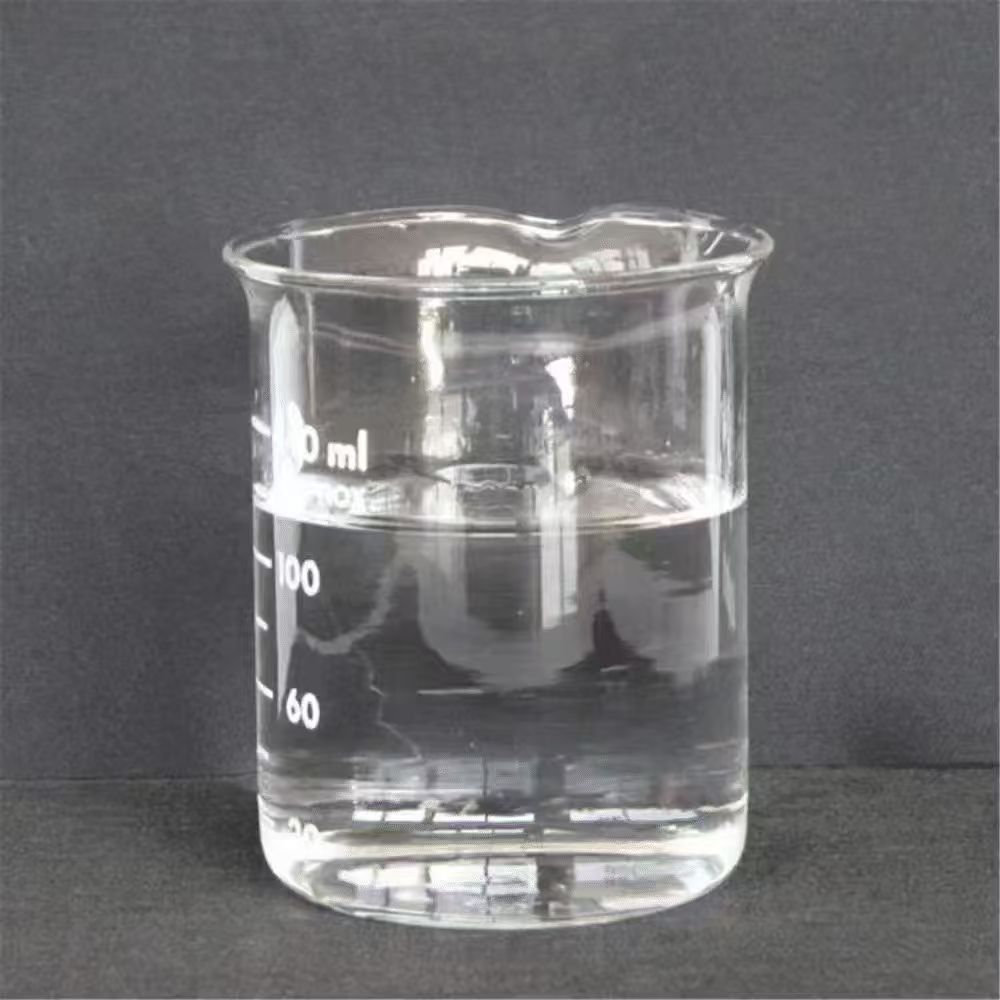
A novel hydroxy terminated silicone oil featuring ultra-high hydroxyl density (≥12%) and controlled viscosity has been successfully synthesized by a polymer research team, overcoming the long-standing challenge of self-condensation and poor storage stability that previously limited hydroxyl content to below 8%. This breakthrough expands the application boundaries of HTSO into waterborne coatings, UV-curable systems, and low-stress encapsulation materials for electronic components.
Conventional HTSO is produced by ring-opening copolymerization of octamethylcyclotetrasiloxane (D4) with tetramethyldisiloxane, followed by hydrolysis or neutralization to introduce terminal hydroxyls. Typical hydroxyl content ranges from 1% to 6%, and when attempts are made to increase OH density by raising the chain terminator ratio, molecular weight drops sharply, volatility increases, and intermolecular condensation leads to gelation. The new approach employs a “protection-graft-deprotection” multi-step synthesis. Hydroxyl-containing precursors are first silylated to protect reactive sites, chain growth is carried out in a non-aqueous medium, and protective groups are then removed under mild conditions. This strategy achieves random distribution of hydroxyl groups along the polysiloxane backbone rather than exclusively at the chain ends. Characterization results show hydroxyl density up to 13.2%, viscosity adjustable between 200 and 3000 mPa·s, and storage stability exceeding 12 months at room temperature without significant thickening.
In the coatings industry, this high-OH HTSO has demonstrated remarkable value. In conventional waterborne two-component polyurethane systems, the hydroxyl resin is typically a polyester or polyacrylate that reacts with an isocyanate crosslinker. However, these resins lack the flexibility, weatherability, and low surface energy of silicones. Introducing 15% high-OH HTSO into a standard formulation increased water contact angle from 72° to 101° and extended salt spray resistance from 240 to over 600 hours. Moreover, the denser crosslinked network raised coating hardness from HB to 2H without sacrificing flexibility (no cracking on 2 mm mandrel bending). These properties make high-OH HTSO highly attractive for marine anti-corrosion coatings, wind turbine blade coatings, and high-durability architectural finishes.
For electronic encapsulation, high-OH HTSO enables interpenetrating polymer networks (IPNs) with epoxy resins. By reacting hydroxyl groups with epoxy rings, a chemically bonded silicone-epoxy IPN is formed, combining the low modulus and thermal stability of silicone with the adhesion and barrier properties of epoxy. The resulting material exhibits glass transition temperatures tunable from 50 to 120°C, elongation at break up to 150%, and a dielectric constant below 3.5 at 1 MHz. Such properties are crucial for 5G communication modules and power electronics, where thermomechanical stress management is critical. In Mini-LED backlight units, high-OH HTSO acts as a dispersant and crosslinker for titanium dioxide particles in white reflective coatings, maintaining reflectance above 94% after 1000 hours of damp-heat aging (85°C/85% RH). The technology has been validated at kilogram scale, and pilot-scale trials are underway. Industry experts anticipate that commercial production of high-reactivity HTSO will break the technical monopoly of a few international players and enable downstream coating and electronics manufacturers to upgrade their formulations. While current lab-scale costs are about three times higher than conventional HTSO, continuous flow processing and catalyst recycling could reduce the cost premium to below 50% within two years.