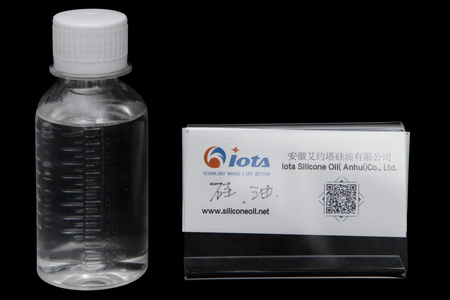
In October 2026, multiple domestic cosmetic raw material testing institutions in China jointly released the Industry Measured Report on Low-Viscosity Dimethyl Silicone Oil Substituting for Decamethylcyclopentasiloxane (D5). Based on long-term tracking data of more than 200 mass-produced cosmetic formulas, the report clarifies the practical implementation boundary of the widely discussed core industry topic — "whether low-viscosity refined dimethyl silicone oil can legally replace D5". The report points out that refined cosmetic-grade dimethyl silicone oil within a specific viscosity range, after multiple stages of devolatilization and purification, can complete D5 substitution in the vast majority of personal care scenarios with scientific formula adjustment, while meeting regulatory compliance requirements and consumer usage experience standards. This measured conclusion provides a practical and real reference for thousands of domestic cosmetic enterprises that are promoting D5 reduction and substitution.
Tightening regulations force accelerated industry substitution, and D5 replacement has evolved from an optional solution to a mandatory requirement
In recent years, regulatory requirements for D4 and D5 in major global markets have continued to escalate. The EU Cosmetics Regulation has long listed D5 as an ingredient subject to strict limited control, and China’s Technical Safety Specification for Cosmetics has also synchronously updated relevant control requirements for cyclic siloxane residues, clarifying the total residual limit indicators of D4 and D5 in finished products. In the past three years, dozens of batches of imported and domestic cosmetics in China have been notified by market regulatory authorities due to excessive D5 residues, and products of many brands have faced compliance risks such as delisting and recall.
Against this background, the industry initially tried various alternative routes such as non-silicon special esters and isoparaffins, but they generally faced problems such as insufficient spreadability, sticky skin feel, and significant cost increases, and could never balance the relationship among compliance, skin feel and cost. Low-viscosity refined cosmetic-grade dimethyl silicone oil, as a silicone-based raw material of the same system, has become the alternative technology route with the highest industry acceptance and the fastest implementation speed at present.
Verification of 200 Formulas: Not all low-viscosity dimethyl silicone oils are suitable for D5 substitution
This joint measurement covers 7 categories of mainstream cosmetic products, including toners, essences, liquid foundations, air cushion foundations, antiperspirant roll-ons, hair care essential oils and body lotions, and more than 200 groups of parallel formula control tests have been completed. The final clear conclusion is drawn: not all low-viscosity dimethyl silicone oils can directly replace D5. Only grades that simultaneously meet the following three hard indicators can enter the candidate substitution list:
-
Viscosity range strictly falls within 2~5mm²/s (tested at 25℃): Measured data shows that grades with viscosity lower than 2mm²/s volatilize too fast, which will cause obvious instant skin drying sensation after being applied to the skin; grades with viscosity higher than 5mm²/s have significantly increased residual feeling, which will destroy the original refreshing and non-burden skin feel brought by D5. Only grades in the 2~5mm²/s range have fluidity and spreadability closest to the basic physical properties of D5.
-
Underwent at least three stages of molecular distillation devolatilization treatment: Ordinary low-viscosity dimethyl silicone oil generally has D4 and D5 residues at a level of thousands of ppm, which completely fails to meet compliance requirements. Only refined grades that have undergone at least three stages of deep devolatilization via molecular distillation can control the total cyclic residue below 100ppm, laying a foundation for finished product compliance from the raw material end.
-
Surface tension at 25℃ is controlled in the range of 18.5~20.5mN/m: The surface tension of D5 is about 18mN/m. The measurement shows that low-viscosity dimethyl silicone oil grades with surface tension in the range of 18.5~20.5mN/m have the most uniform spread performance on the surface of skin and color pigments, which is closest to D5, and will not cause problems such as uneven spreading and excessive difference in local film-forming thickness.
In this measurement, more than 90% of the tested product categories can achieve usage experience close to the original D5 formula after minor formula adjustments, using candidate grades that fully meet the above three indicators.
Scenario-based measured implementation effects: The adaptation differences of different product categories are clearly defined
Based on a large number of measured data, the implementation difficulty and optimization direction of different cosmetic product categories using compliant low-viscosity dimethyl silicone oil to replace D5 have been completely clarified:
-
Lightweight toners and transparent essence products: This category has the lowest substitution difficulty. Select grades in the 2~3mm²/s range, adjust the addition ratio, and there is no need to significantly modify the original formula system. The product can pass compliance testing, and 92% of consumers participating in blind tests cannot distinguish the skin feel difference between the new and old formulas. At present, more than 30 listed skin care products in China have completed substitution implementation in this scenario.
-
Liquid foundation, air cushion foundation and other color makeup products: Minor optimization is required for substitution. A single low-viscosity grade cannot completely replicate the color pigment dispersion characteristics of D5. By matching a small amount of polyether-modified silicone dispersant compatible with the system and adjusting the grinding process parameters, the dispersion stability of color pigments can be guaranteed, and the difference in makeup holding time from the original formula is controlled within 5%, which fully meets the performance requirements of mass-produced products. Many leading domestic color makeup brands have completed the D5 substitution upgrade of their full-range foundation products.
-
Antiperspirant roll-ons and spray products: This category has the largest optimization space after substitution. Select grades in the 3~5mm²/s range, adjust the compound ratio with other alcohol components in the system, and the dry feeling can even be better than that of traditional D5 formulas. After some brands’ upgraded products were launched, the consumer complaint rate related to stickiness decreased by 17%.
-
Hair care essential oils and lightweight body lotion products: This category has the most obvious experience optimization after substitution. Select grades in the 4~5mm²/s range. After substitution, the smooth retention time of the product on the surface of hair and skin is extended by about 30% compared with the original D5 formula, without obvious greasy residual feeling, and the long-term smooth experience of the product is further improved.
The measurement also found that for some special extreme color makeup products that pursue ultra-fast instantaneous volatilization, a single low-viscosity dimethyl silicone oil cannot completely replicate the volatilization curve of D5. For such scenarios, a compounding scheme of "low-viscosity dimethyl silicone oil + a small amount of compliant volatile additives" can also achieve compliant implementation.
Practical risks and avoidance guidelines during substitution implementation
Based on real substitution cases of a large number of enterprises, the industry report also clearly lists several implementation misunderstandings that must be avoided:
-
Never use industrial-grade low-viscosity dimethyl silicone oil to replace cosmetic-grade raw materials: The heavy metal and harmful impurity residue indicators of industrial-grade products completely fail to meet the requirements of the Technical Safety Specification for Cosmetics. Once used, it will directly lead to non-compliance of finished products and bring serious product safety risks.
-
Never directly judge the compliance of finished products only based on the test report provided by raw material suppliers: It is necessary to independently complete the total residual test of D4 and D5 for the whole finished product. In addition to the low-viscosity silicone oil used for substitution, other raw materials in the formula such as ordinary viscosity dimethyl silicone oil and emulsifiers may also bring in trace cyclic residues, and the accumulated total may still cause the total residual of the finished product to exceed the limit.
-
Never skip the long-term stability test and directly start mass production: Some low-viscosity grades have insufficient compatibility with other components in the original formula system. They appear transparent and uniform at room temperature, but will show slight turbidity and precipitation after 30 days of accelerated storage test at 45℃. Complete the full high and low temperature cycle stability verification before promoting mass production.
FAQ
Q: Can finished products using 3mm²/s three-stage devolatilization refined dimethyl silicone oil to replace D5 pass the current domestic cyclic siloxane residue test in China?
A: As long as the total cyclic residue of the selected raw material is controlled below 100ppm, and the sum of cyclic residues brought in by all other raw materials in the formula is calculated, the total residual of D4 and D5 in the finished product can be completely controlled within the compliance limit. Hundreds of mass-produced and listed products in China have passed relevant tests so far.
Q: Will the makeup holding effect of liquid foundation show a visually noticeable decline after substitution?
A: According to the measured data of 200 groups of formulas in this report, the difference in makeup holding time between the finished foundation product after formula optimization and the original D5 formula is within 5%. Ordinary consumers will hardly perceive obvious differences during daily use, and the makeup holding performance of some fully optimized products is even better than that of the original formula.
Q: Will the dry feeling of antiperspirant spray deteriorate after replacing D5 with low-viscosity dimethyl silicone oil?
A: The measurement shows that by selecting refined grades in the 3~5mm²/s range and optimizing the formula compounding, the drying speed and dryness of the product after application can fully reach or even exceed that of the traditional D5 formula. After the upgraded products of many brands were launched, the consumer praise rate for dry feeling even increased.
Q: Is there any low-viscosity dimethyl silicone oil that can replace D5 directly with equal mass without any formula adjustment?
A: At present, there is no perfect substitute grade that can adapt to all product categories without any formula adjustment. Even if the physical property indicators are very close, minor proportion fine-tuning for the specific pigment system and oil system of the product is a necessary link to ensure the final product experience stability, and it is also the general operation process for mass production implementation in the current industry.
Q: Will the compliance cost increase significantly during the D5 substitution process?
A: The unit price of compliant low-viscosity dimethyl silicone oil that has undergone deep devolatilization and purification will have a certain increase compared with ordinary industrial-grade products. However, compared with previous alternative routes such as non-silicon special esters and isoparaffins, the overall formula cost increase can be controlled within 10%, making it the alternative solution with the most obvious comprehensive cost advantage at present.