Hits: 161 img
I. The Molecular Keystone: Redefining Reactivity in the Silicone Value Chain
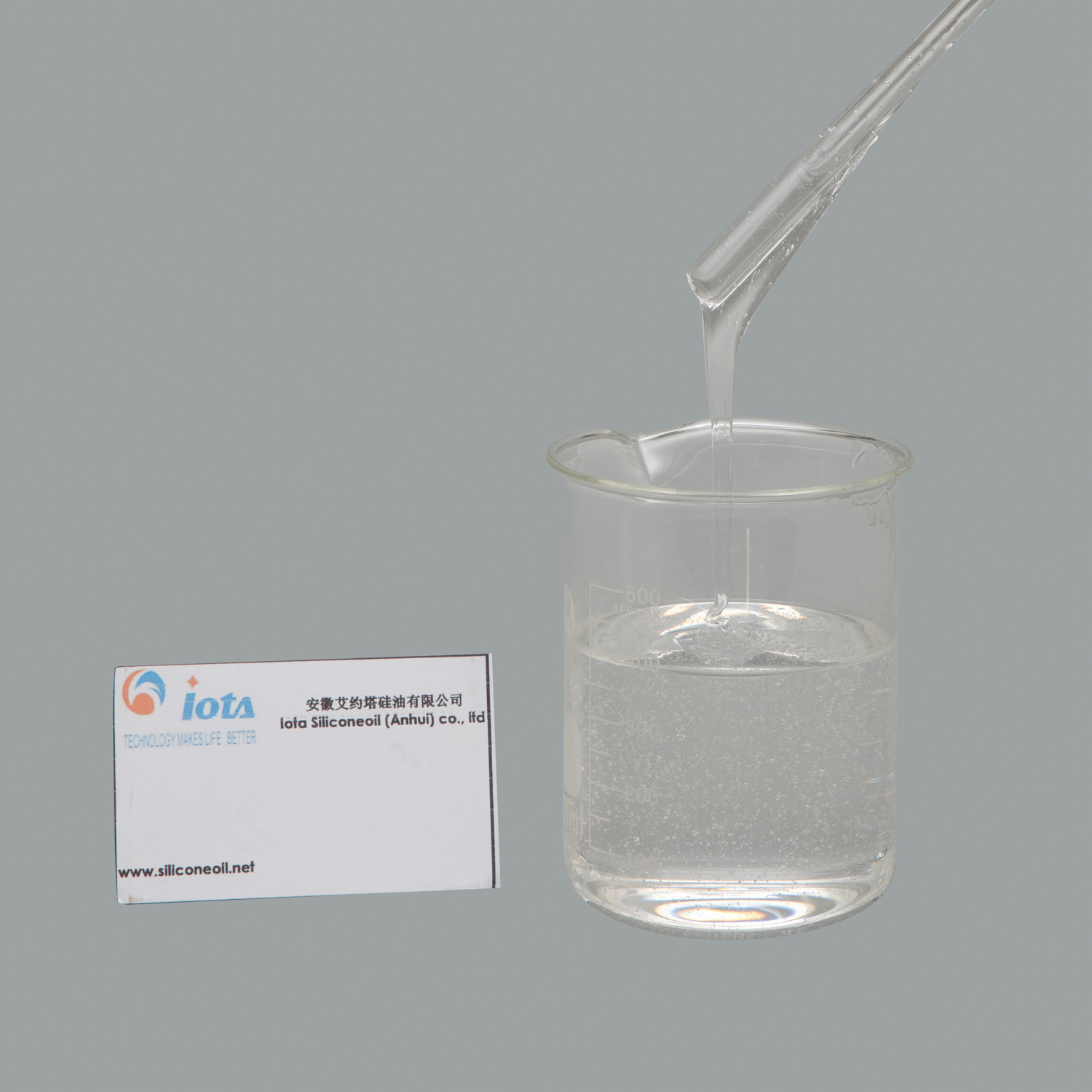
In the vast and complex landscape of modern industrial chemistry, few substances play as pivotal yet understated a role as hydrogen-containing silicone oil. Scientifically referred to as polymethylhydrosiloxane (PMHS) or hydride-terminated polysiloxanes, this specialized fluid serves as the critical reactive bridge between raw silicon metals and the myriad of high-performance silicone products that define contemporary life. Unlike its more common cousin, dimethyl silicone oil, which is prized primarily for its thermal stability and lubricity, hydrogen-containing silicone oil is defined by what it can do rather than what it is. Its value lies in the silicon-hydrogen (Si-H) bond, a functional group of extraordinary reactivity that acts as the universal key for unlocking advanced material properties through hydrosilylation reactions.
The strategic importance of this material has surged in recent years as global industries pivot toward higher efficiency, durability, and sustainability. The Si-H bond possesses a unique ability to add across unsaturated carbon-carbon double bonds (vinyl, allyl) and other functional groups in the presence of noble metal catalysts, typically platinum complexes. This reaction, known as hydrosilylation, is the cornerstone of modern silicone curing technology. It allows for the precise construction of three-dimensional polymer networks without the release of volatile byproducts, a distinct advantage over traditional condensation-cure systems. As a result, hydrogen-containing silicone oil has transitioned from a niche chemical intermediate to a strategic resource essential for the fabrication of everything from microchips and solar panels to medical implants and high-performance textiles.
The global supply chain for this material is undergoing a significant transformation. Historically concentrated in a few technologically advanced regions, production capabilities are now expanding rapidly to meet the insatiable demand of emerging markets. This expansion is not merely about volume; it is driven by a relentless pursuit of purity and structural control. The performance of the final silicone product—whether it is the clarity of an optical lens, the elasticity of a soft robot, or the adhesion strength of a aerospace sealant—is directly correlated to the precise distribution of hydrogen atoms along the silicone backbone and the absence of impurities. Consequently, the industry is witnessing a technological arms race focused on catalytic efficiency, molecular weight distribution control, and the elimination of trace contaminants that could compromise downstream applications.
Furthermore, the versatility of hydrogen-containing silicone oil extends beyond its role as a crosslinker. It functions as a potent reducing agent in organic synthesis, a surface modifier for inorganic fillers, and a foam control agent in aggressive chemical environments. This multifunctionality makes it indispensable across diverse sectors, creating a complex web of interdependencies where disruptions in the supply of high-grade hydrosilicone oil can ripple through entire manufacturing ecosystems. As nations recognize the material's critical role in securing their advanced manufacturing bases, policies are being formulated to encourage domestic innovation and reduce reliance on imported specialized grades, marking a new era of geopolitical significance for this unassuming chemical fluid.
II. Precision Engineering in Electronics: From Chip Encapsulation to Thermal Management
The semiconductor industry, the engine of the digital age, operates at the limits of physical possibility, where even microscopic imperfections can lead to catastrophic failure. In this high-stakes environment, hydrogen-containing silicone oil has emerged as a non-negotiable component in the packaging and protection of integrated circuits. As electronic devices become smaller, faster, and more powerful, the heat they generate increases exponentially, while the physical space available for dissipation shrinks. Traditional epoxy resins, once the standard for chip encapsulation, often struggle with the coefficient of thermal expansion (CTE) mismatch between the silicon die and the packaging material, leading to stress fractures and delamination during thermal cycling.
Silicone encapsulants, cured via the hydrosilylation reaction facilitated by hydrogen-containing silicone oil, offer the ideal solution. These materials possess a low modulus of elasticity, allowing them to absorb mechanical stress without cracking, while maintaining excellent thermal stability up to 200 degrees Celsius and beyond. The precision of the curing process is paramount; the ratio of Si-H groups to vinyl groups must be meticulously balanced to ensure complete crosslinking without leaving residual reactive species that could corrode delicate aluminum or copper wire bonds. Ultra-high purity grades of hydrogen-containing silicone oil, with metal ion contents measured in parts per billion (ppb), are now standard requirements for advanced packaging technologies such as Flip-Chip and System-in-Package (SiP).
Beyond encapsulation, the rise of electric vehicles (EVs) and 5G infrastructure has catapulted thermal interface materials (TIMs) into the spotlight. These materials fill the microscopic air gaps between heat-generating components and heat sinks, facilitating efficient heat transfer. The latest generation of TIMs utilizes silicone matrices crosslinked by hydrogen-containing silicone oil to achieve a unique combination of high thermal conductivity and low thermal impedance. The ability to tune the crosslink density allows engineers to optimize the material's "pump-out" resistance, ensuring that the thermal paste remains effective over the multi-year lifespan of the device despite repeated heating and cooling cycles.
Moreover, the advent of flexible and wearable electronics has opened new frontiers for hydrosilicone chemistry. Stretchable conductive inks and elastomeric substrates rely on the robust network formed by the reaction of Si-H bonds to maintain electrical continuity under extreme deformation. Whether it is a smartwatch strap that monitors vital signs or a foldable smartphone screen, the durability and reliability of these devices are underpinned by the mechanical integrity of the silicone matrix, which is directly derived from the quality of the hydrogen-containing precursor. As the Internet of Things (IoT) expands to connect billions of devices, the demand for these high-performance, reliable electronic materials will continue to surge, positioning hydrogen-containing silicone oil as a critical enabler of the next digital revolution.
III. The Green Energy Backbone: Enhancing Durability in Photovoltaics and Wind Power
The global transition to renewable energy is heavily dependent on materials that can withstand decades of exposure to harsh environmental conditions while maintaining peak efficiency. In the photovoltaic (PV) sector, hydrogen-containing silicone oil plays a silent but vital role in the longevity and performance of solar modules. Solar panels are designed to operate outdoors for 25 to 30 years, enduring intense ultraviolet radiation, extreme temperature fluctuations, humidity, and mechanical loads from wind and snow. The encapsulant film, which sandwiches the solar cells, is the first line of defense against these elements.
While ethylene-vinyl acetate (EVA) has long been the dominant encapsulant material, it suffers from issues related to acetic acid release and potential induced degradation (PID) over time. Polyolefin elastomers (POE) and liquid silicone rubbers (LSR), which utilize hydrogen-containing silicone oil as a crosslinker, are increasingly being adopted for high-efficiency bifacial modules and concentrated photovoltaic systems. The hydrosilylation cure mechanism offers a distinct advantage: it is additive, meaning no volatile byproducts are released that could cloud the glass or corrode the cell contacts. This results in higher light transmittance and sustained power output over the module's lifetime. Furthermore, the superior water vapor barrier properties of silicone-based encapsulants prevent moisture ingress, a primary cause of cell corrosion and efficiency loss.
In the realm of wind energy, the scale of turbine blades has grown dramatically, with some exceeding 100 meters in length. These massive structures require adhesive systems that can bond composite materials securely while flexing under immense aerodynamic loads. Silicone adhesives, cured using hydrogen-containing silicone oil, provide the necessary toughness and fatigue resistance to ensure the structural integrity of these blades. Unlike rigid epoxy adhesives that may crack under cyclic loading, silicone adhesives maintain their elasticity, distributing stress evenly across the bond line. This capability is crucial for offshore wind farms, where maintenance is difficult and costly, and reliability is paramount.
Additionally, hydrogen-containing silicone oil is instrumental in the development of self-cleaning coatings for solar panels and wind turbine blades. By modifying the surface energy of these structures, silicone-based coatings can repel dust, dirt, and ice, minimizing efficiency losses due to soiling and reducing the need for water-intensive cleaning operations. As the renewable energy sector scales up to meet global climate goals, the volume of high-performance silicone materials required will increase exponentially. The industry is responding by optimizing production processes to lower the carbon footprint of these materials, ensuring that the enablers of green energy are themselves produced sustainably.
IV. Revolutionizing Healthcare and Personal Care: Biocompatibility and Sensory Innovation
The healthcare and personal care industries are driven by an unyielding demand for safety, efficacy, and sensory appeal. Hydrogen-containing silicone oil, through its derivatives, has revolutionized both sectors by enabling the creation of materials that are biocompatible, stable, and aesthetically superior. In the medical field, the strict regulatory requirements for biocompatibility necessitate materials that are non-toxic, non-irritating, and free from leachable impurities. Silicone elastomers cured via hydrosilylation meet these rigorous standards, making them the material of choice for a wide range of medical devices, including catheters, respiratory masks, wound care dressings, and implantable components.
The precision of the hydrosilylation reaction ensures that the final polymer network is chemically inert and stable, preventing the release of low-molecular-weight species that could trigger adverse biological responses. This stability is particularly critical for long-term implants, where material degradation could have severe health consequences. Furthermore, the ability to incorporate functional groups into the silicone backbone allows for the development of drug-eluting devices, where therapeutic agents are covalently bonded to the polymer matrix and released in a controlled manner over time. This innovation holds immense promise for treating chronic conditions and reducing the frequency of medical interventions.
In the personal care sector, consumer preferences have shifted towards products that offer luxurious textures and long-lasting benefits without compromising skin health. Hydrogen-containing silicone oil is the precursor for a vast array of cosmetic ingredients, including volatile silicones, emollients, and film-formers. These ingredients provide the "silky" feel that consumers associate with premium shampoos, conditioners, lotions, and makeup products. Amino-modified silicones, synthesized using hydrosilicone intermediates, have a unique affinity for damaged hair and skin, selectively depositing on compromised areas to repair and protect without weighing down the tissue.
Recent innovations have leveraged the reactivity of the Si-H bond to create "smart" cosmetic formulations. For instance, silicone elastomers that can encapsulate active ingredients like vitamins and antioxidants, releasing them upon application to the skin, are becoming increasingly popular. Additionally, the development of water-based silicone emulsions, stabilized by reactive surfactants derived from hydrogen-containing silicone oil, addresses the growing consumer demand for sustainable and eco-friendly beauty products. These emulsions offer the performance benefits of traditional solvent-based systems while eliminating the use of volatile organic compounds (VOCs). As the boundaries between healthcare and wellness blur, the role of high-purity, functional silicone materials will continue to expand, driving innovation in product formulation and delivery systems.
V. Navigating the Future: Sustainable Synthesis and the Circular Economy
As the global community grapples with the challenges of climate change and resource depletion, the chemical industry is under pressure to reinvent its processes and products. The future of hydrogen-containing silicone oil lies in the adoption of green chemistry principles and the transition toward a circular economy. Traditional synthesis methods, which often involve batch processing, solvent usage, and energy-intensive purification steps, are being reimagined through the lens of sustainability. Continuous flow chemistry, utilizing micro-reactors, offers a promising pathway to more efficient and safer production. This technology enables precise control over reaction conditions, minimizing waste, reducing energy consumption, and enhancing the consistency of the final product.
One of the most significant advancements is the development of catalyst-free or low-catalyst curing systems. While platinum catalysts are highly effective, they are expensive and can be sensitive to poisoning by certain impurities. Research is underway to develop alternative catalytic systems based on earth-abundant metals or even organocatalysts that can facilitate the hydrosilylation reaction with comparable efficiency. Such innovations would not only reduce costs but also mitigate the environmental impact associated with the mining and refining of precious metals.
The concept of recyclability is also gaining traction within the silicone industry. Unlike many thermoset plastics that end up in landfills, silicone materials can be depolymerized back into their constituent monomers or oligomers through pyrolysis or chemical recycling processes. Hydrogen-containing silicone oil plays a key role in this loop, as it can be regenerated from recycled silicone waste and reused as a crosslinker or modifier. Several pilot projects are currently exploring the feasibility of closed-loop recycling systems for silicone products, aiming to recover valuable silica and siloxane units for reintroduction into the production cycle.
Looking ahead, the integration of bio-based feedstocks into silicone production represents the next frontier. While silicon itself is derived from sand, the organic groups attached to the silicon backbone are traditionally sourced from fossil fuels. Efforts are being made to replace these petrochemical precursors with bio-derived alternatives, potentially reducing the carbon footprint of the entire value chain. As regulations tighten and consumer awareness grows, the industry's ability to adapt and innovate will determine its long-term viability. Hydrogen-containing silicone oil, with its unique chemical versatility and central role in high-tech applications, is poised to remain at the forefront of this transformation, driving the development of materials that are not only high-performing but also environmentally responsible. The journey from a simple chemical intermediate to a cornerstone of sustainable advanced materials underscores its enduring significance in shaping the future of human progress.