Hits: 152 img
Ultra-Low Viscosity Hydrogen-Containing Silicone Oil Achieves Mass Production, Empowering the Upgrading of Photovoltaic and New Energy Material Industries
I. Product Definition: Unique Performance Advantages of Special-Structure Hydrogen-Containing Silicone Oil
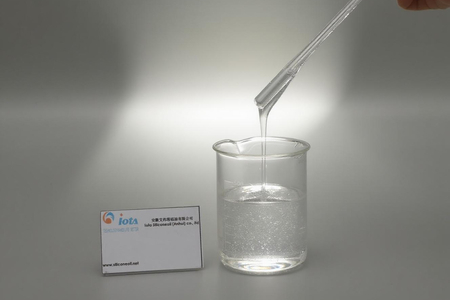
Ultra-low viscosity hydrogen-containing silicone oil generally refers to a special category of hydrogen-containing silicone oil products with kinematic viscosity between 5-20mm²/s at 25°C and highly uniform distribution of active hydrogen in the molecular chain. Different from ordinary medium and high viscosity hydrogen-containing silicone oils, it has shorter molecular chains, extremely narrow molecular weight distribution, and highly regular arrangement of Si-H active sites on the molecular backbone. Therefore, it possesses high reactivity, low surface tension and excellent fluidity that ordinary hydrogen-containing silicone oils cannot match.
In the past, the large-scale production of ultra-low viscosity hydrogen-containing silicone oil has always been a recognized technical challenge in the industry. When traditional equilibration polymerization processes produce low-viscosity products, they inevitably generate large amounts of low-molecular-weight cyclic impurities such as dimethylcyclosiloxanes (D4, D5). These impurities not only significantly reduce the reaction activity of the product but also slowly release during downstream applications, causing environmental pollution and deterioration of product performance. For a long time, only a very small number of enterprises worldwide could mass-produce ultra-low viscosity hydrogen-containing silicone oil that meets environmental protection standards. The product supply has long been in a state of shortage, with high prices, severely limiting its large-scale application in emerging fields such as photovoltaics, new energy, and special building materials.
Domestic R&D teams have successfully achieved stable mass production of ultra-low viscosity hydrogen-containing silicone oil with a molecular weight distribution index below 1.2 by developing a combined process of “living polymerization - continuous flash evaporation - molecular distillation”. The total content of cyclic impurities such as D4 and D5 in the product is less than 100ppm, far below the limit specified in the EU REACH regulation, providing a brand-new material solution for the upgrading of multiple trillion-level downstream industries.
II. Core Process Innovation: Precise Synthesis and Purification of Narrow Molecular Weight Distribution
This brand-new production process for ultra-low viscosity hydrogen-containing silicone oil completely abandons the traditional acid-base equilibration polymerization route, and innovatively adopts “anionic living ring-opening polymerization” technology. Using high-purity cyclic hydrogen siloxane as the starting material, under strictly controlled low-temperature, anhydrous and oxygen-free environments, a trace amount of organic base is used as the initiator to complete the ring-opening polymerization reaction. Since there are no chain transfer and chain termination side reactions during the living polymerization process, the growth of molecular chains is highly synchronized, and the resulting crude product has an extremely narrow molecular weight distribution, fundamentally reducing the generation of low-molecular-weight cyclic bodies.
The crude product then enters a three-stage continuous flash evaporation system. Under gradually increasing vacuum and gradient heating conditions, most unreacted monomers and light component impurities are first removed, before entering two-stage high-vacuum molecular distillation units. By controlling the temperature difference and vacuum degree between the evaporation surface and the condensation surface, residual trace low-molecular-weight cyclic impurities are completely separated and removed at a temperature far below the product decomposition temperature. The final finished product not only has an extremely narrow molecular weight distribution, but the viscosity and active hydrogen content of the product can be precisely customized according to the needs of downstream customers within an ultra-wide range, and the performance deviation between different batches of products is almost negligible.
Another major advantage of this process is its extremely strong molecular structure designability. It can not only produce side-chain full-hydrogen high-activity ultra-low viscosity hydrogen-containing silicone oil, but also produce special grades such as terminal hydrogen type and partially hydrogen-modified products, meeting the differentiated needs of different downstream scenarios. The product has extremely low volatile content, with a mass loss rate of less than 0.1% after heating at 120°C for 2 hours, fully complying with the world’s most stringent environmental protection and safety standards.
III. Scenario Value Release: Material Innovation in Photovoltaic and New Energy Fields
Ultra-low viscosity hydrogen-containing silicone oil with excellent performance is catalyzing revolutionary application upgrades in multiple emerging industries, among which the photovoltaic new energy and building material sectors have seen the most far-reaching impacts.
In the photovoltaic module encapsulation sector, ultra-low viscosity hydrogen-containing silicone oil, as a crosslinking agent for addition-cure organosilicon encapsulant, can quickly complete the crosslinking reaction at room temperature to form a highly crosslinked elastomer network. Due to its narrow molecular weight distribution and highly uniform crosslinking point distribution, the cured organosilicon encapsulant has a light transmittance of over 94%, with significantly improved yellowing resistance. After 25 years of long-term outdoor use, the light transmittance decrease is less than 2%, far better than modules encapsulated with traditional epoxy resin. N-type photovoltaic modules encapsulated with this material achieve a more than 2.5% improvement in long-term outdoor power generation efficiency, significantly increasing the full-lifecycle power generation revenue of the modules, perfectly meeting the demand of next-generation high-efficiency photovoltaic modules for high-reliability encapsulation materials.
In the polyurethane foam seat sector for new energy vehicles, ultra-low viscosity hydrogen-containing silicone oil, as a high-efficiency foam stabilizer, is added to the polyurethane foaming system. It can rapidly reduce the surface tension of the system, making the generation and distribution of bubbles extremely uniform. The final polyurethane foam has fine and consistent pore sizes, with 30% improved resilience, and will not collapse and deform after long-term use, greatly enhancing the riding comfort and service life of new energy vehicle interiors. At the same time, due to the extremely low content of low-molecular-weight cyclic impurities in the product, it will not slowly volatilize during use to form the “fogging” problem on car windows, completely solving the long-standing VOC emission pain point that has plagued the automotive industry.
In the building waterproofing and special coating sector, ultra-low viscosity hydrogen-containing silicone oil, as a high-efficiency hydrophobic agent for concrete and stone, can penetrate to a depth of 3-5mm below the surface of building materials, and undergo crosslinking reaction inside the pores to form an invisible hydrophobic breathable layer. After treatment, the waterproof performance of concrete building surfaces is improved by more than 10 times, with a water contact angle exceeding 130°, while not affecting the breathability of building materials at all. Rainwater cannot penetrate into the wall, but the moisture inside the wall can dissipate outward normally, greatly extending the service life of buildings and reducing building maintenance costs.
IV. Industrial Trend Outlook: From Special Intermediates to Core Support for Green Manufacturing
Current technological innovation for ultra-low viscosity hydrogen-containing silicone oil is advancing toward deeper levels, and more cutting-edge application scenarios will be further expanded in the future. Food-contact grade ultra-low viscosity hydrogen-containing silicone oil under development by R&D teams has impurity content controlled within the limits specified by national food contact material safety standards. It will be used for hydrophobic treatment of food baking release paper, replacing traditional fluorine-containing oil repellent agents and completely eliminating the health risks caused by perfluoroalkyl compounds. At the same time, R&D on bio-based raw material routes is also advancing rapidly. Ultra-low viscosity hydrogen-containing silicone oil produced from bio-based methylchlorosilane as raw material has a more than 65% lower full-lifecycle carbon footprint than traditional petroleum-based products, fully adapting to the green manufacturing requirements under the global dual-carbon goals.
The domestic breakthrough of ultra-low viscosity hydrogen-containing silicone oil once confirms that technological progress in high-end organosilicon intermediates is the core driving force driving the upgrading of the entire downstream strategic emerging industries. It not only provides brand-new high-performance material options for industries such as photovoltaics, new energy vehicles, and green buildings, but also promotes the entire organosilicon industry to take a solid step toward refinement and high added value, providing indispensable material support for the green and low-carbon transformation of China and even the global manufacturing industry.