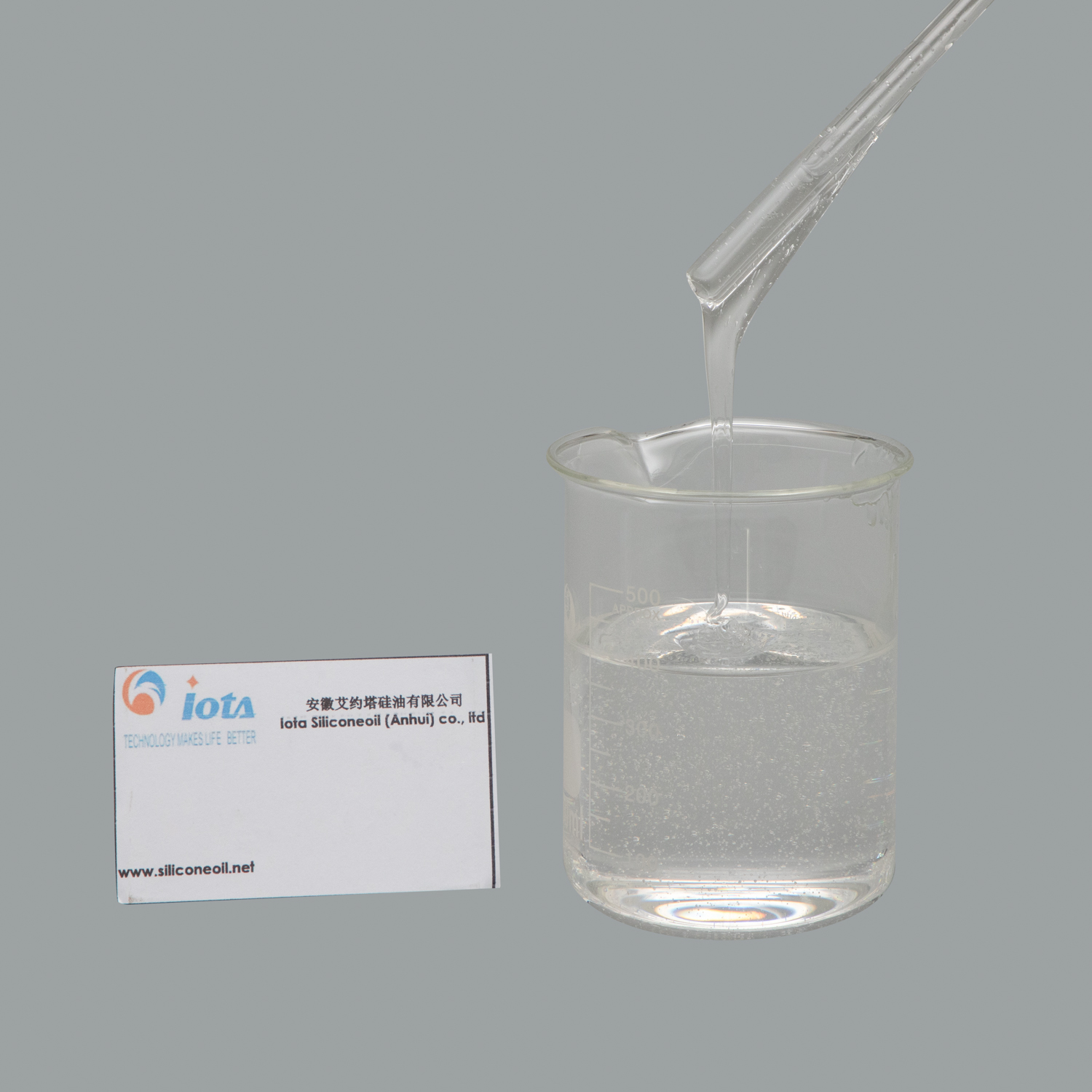
China's Strategic Material Breakthrough: Ultra-High Purity Methylphenyl Silicone Oil Revolutionizes Advanced Chip Packaging and Aerospace Thermal Management
After a decade of focused R&D and process optimization, China has achieved a major milestone in the production of ultra-high purity methylphenyl silicone oil, a critical material for high-end electronics and aerospace. This breakthrough involves a new continuous-flow synthesis and purification process that yields a product with metal ion impurities below 1 ppb (parts per billion) and chlorine content under 5 ppm, setting a new global benchmark. This material is now being deployed in the mass production of advanced Chiplet packaging for processors and as a high-performance thermal interface material (TIM) in next-generation satellite systems, directly addressing critical supply chain vulnerabilities in these strategic sectors. The development positions China as a leader in the high-purity specialty organosilicon market, a domain previously dominated by a handful of overseas chemical giants.
The Critical Role of Methylphenyl Silicone Oil in Modern Technology
Methylphenyl silicone oil is a specialized organosilicon fluid distinguished by its unique combination of phenyl and methyl groups attached to a siloxane backbone. This molecular structure grants it exceptional properties unattainable by standard methyl silicone oils: an ultra-wide operating temperature range (from -80°C to over 350°C), superior resistance to gamma and neutron radiation, outstanding dielectric stability, and remarkably low volatility even under high vacuum. These attributes make it indispensable in applications where failure is not an option.
In the semiconductor industry, its primary role is as a high-temperature, high-purity immersion cooling fluid and dielectric medium in advanced packaging processes like Chiplet integration and 3D stacking. During the thermal compression bonding of silicon dies, the fluid must provide flawless thermal transfer while leaving absolutely no ionic residues that could cause electrochemical migration and chip failure. Similarly, in aerospace, methylphenyl silicone oil is used as a thermal interface material in satellites and spacecraft, where it must maintain stable thermal conductivity and remain non-volatile in the extreme temperature swings and vacuum of space over mission lifespans exceeding 15 years. For decades, the capability to produce this material at the required purity and consistency was concentrated outside China, creating a significant bottleneck for domestic industries aiming for the technological frontier.
Technical Breakthrough: A Closed-Loop, Catalytic Purification Process
The core of the recent achievement lies in a proprietary, multi-stage purification system that moves beyond traditional batch distillation methods. The new process integrates several key innovations:
-
Advanced Catalytic Scavenging: A novel organometallic catalyst is employed in a dedicated reactor stage to selectively bind and remove trace metal ions (such as sodium, potassium, and iron) and ionic chlorine residues at the molecular level. This step is crucial for achieving the sub-ppb metal impurity levels required for semiconductor manufacturing.
-
Supercritical Fluid Chromatography (SFC): Following catalytic treatment, the silicone oil undergoes purification using supercritical carbon dioxide as a mobile phase in a continuous chromatography column. This technique, adapted from pharmaceutical manufacturing, separates molecules based on slight differences in polarity and size with efficiency, removing oligomeric cyclic siloxanes (D4-D6) and other low-molecular-weight contaminants that contribute to volatility.
-
Integrated Real-Time Analytics and Process Control: The entire production line is equipped with online mass spectrometry and ion chromatography systems that provide real-time feedback on impurity levels. This data feeds into an AI-driven control system that dynamically adjusts reactor parameters, distillation temperatures, and flow rates, ensuring batch-to-batch consistency that meets the strictest aerospace and semiconductor qualification standards.
This closed-loop system not only achieves unprecedented purity but also boasts a yield exceeding 95%, a significant improvement over the 70-80% yield of older methods, making high-purity methylphenyl silicone oil more economically viable for large-scale adoption.
Market Impact and Supply Chain Resilience
The successful domestic production of this material has immediate and profound implications for several high-tech industries in China:
-
Semiconductor Advanced Packaging: The availability of a local, reliable source of ultra-high purity methylphenyl silicone oil removes a major dependency for domestic Chiplet packaging facilities. It enables faster iteration and scaling of advanced packaging technologies, which are seen as a key path to maintaining performance gains amidst the physical limits of transistor scaling. Industry analysts note that this could accelerate the development of domestic high-performance computing (HPC) and artificial intelligence (AI) processor platforms.
-
Aerospace and Satellite Manufacturing: For satellite manufacturers, the material's qualification for long-duration space missions enhances supply chain security and reduces lead times. The consistent performance of domestically produced thermal interface materials allows for more predictable thermal design and reliability modeling for next-generation low-earth orbit (LEO) constellations and deep-space probes.
-
High-Energy Physics and Nuclear Technology: The material's excellent radiation resistance makes it suitable for use in detectors, cooling systems, and sealing applications within particle accelerators and nuclear facilities. Domestic production ensures uninterrupted access for these large-scale scientific projects.
Globally, this development introduces a new and competitive source for a high-margin, specialty chemical. It is expected to exert downward pressure on global prices over the medium term and provide global OEMs with an alternative supply option, potentially reducing geopolitical risks associated with single-source dependencies.
Future Outlook and Industry Evolution
The mastery of ultra-high purity methylphenyl silicone oil production is not an endpoint but a platform for further innovation. Research and development efforts are already branching into several promising directions:
-
Functionalized Derivatives: Scientists are developing new variants where the phenyl groups are partially substituted with other functional moieties, such as epoxy or vinyl groups. These "tailored" methylphenyl silicone oils could offer enhanced adhesion to specific substrates or enable them to act as reactive components in high-temperature composite materials.
-
Nano-Enhanced Formulations: Research is underway to create composite materials by dispersing thermally conductive nanoparticles (like boron nitride or aluminum nitride) within the ultra-pure methylphenyl silicone oil matrix. The goal is to create next-generation thermal interface pastes with thermal conductivity exceeding 10 W/m·K for power-dense electronics in electric vehicles and 5G/6G infrastructure.
-
Sustainable Production Pathways: Concurrent development focuses on "green chemistry" approaches for the synthesis of the precursor phenylmethylcyclosiloxanes, aiming to reduce energy consumption and waste generation during the upstream monomer production phase.
The breakthrough in methylphenyl silicone oil exemplifies a broader trend in China's chemical industry: moving beyond commodity production into the high-value, technology-intensive specialty materials segment. It demonstrates a capacity for deep vertical integration, from fundamental chemical synthesis to meeting the exacting standards of end-use industries like semiconductors and aerospace. This capability is crucial for building resilient, innovation-driven industrial ecosystems for the future. As one industry observer noted, "Control over advanced materials like this is as strategically important as control over the chip design software or the manufacturing equipment. It's a foundational layer of modern technological sovereignty."