Hits: 114 img
In the third quarter of 2026, the domestic high-end fluorosilicone material sector achieved a landmark industrial progress: a full-spectrum electronic-grade fluorosilicone oil continuous production unit with a designed annual capacity of 47,000 tons officially completed a 168-hour full-load steady-state operation assessment and realized batch delivery. The series of fluorosilicone oil products produced by this unit cover a fluorine content range of 20% to 75%, with kinematic viscosity extending from 3mm²/s to 50000mm²/s. Among them, the low-viscosity flame-retardant grade for new energy power battery immersion cooling has a flash point higher than 220°C, a kinematic viscosity not exceeding 12mm²/s at -40°C, a stable dielectric constant of 2.1±0.05 at 25°C, and the total residual amount of metal ions is controlled below 0.8ppb. All core performance indicators have reached the international leading level. This achievement marks that China has completely broken the nearly 40-year technological blockade by overseas enterprises on high-end fluorosilicone oil, providing fully independent and controllable core basic material support for key national fields such as new energy vehicle thermal management, semiconductor chip manufacturing, and extreme condition protection for aerospace.
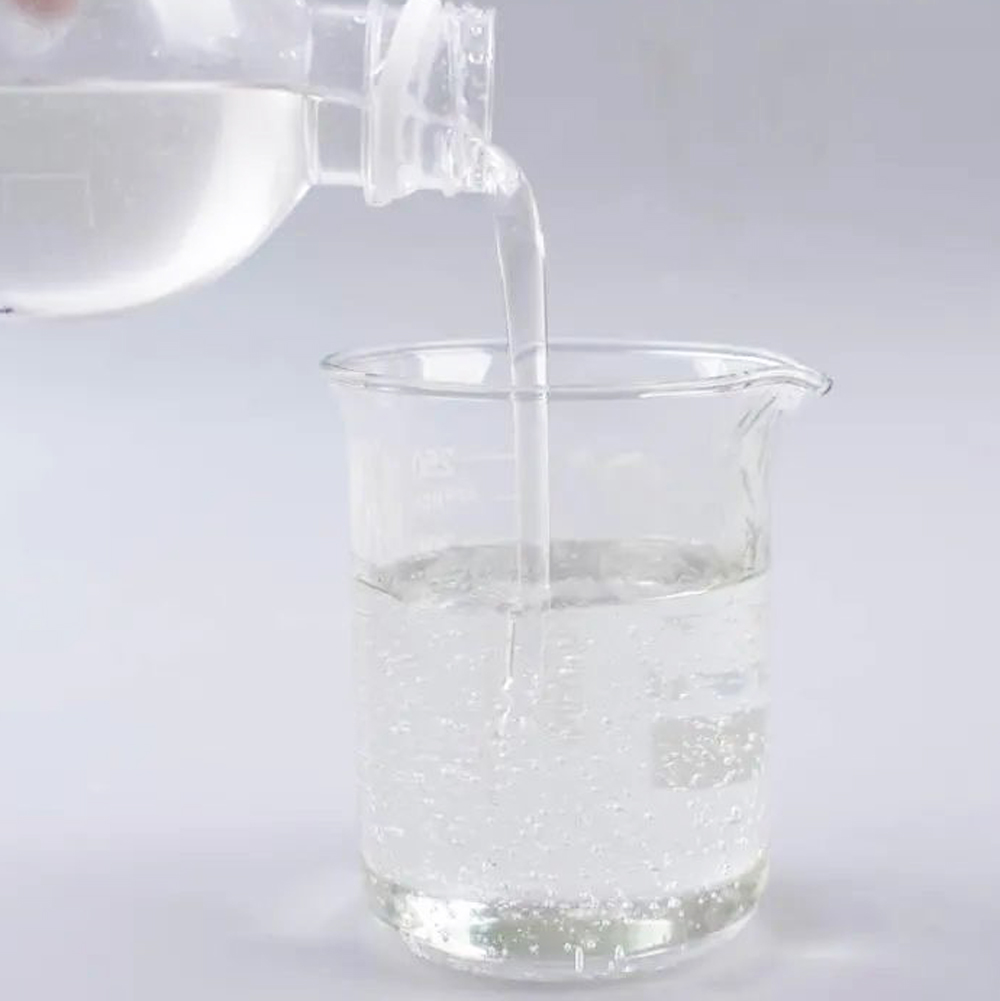
Fluorosilicone oil is a type of high-end modified silicone oil formed by introducing fluoroalkyl groups into the molecular side chain of polysiloxane. By replacing part of the methyl groups of traditional methyl silicone oil with fluorine-containing structures such as trifluoropropyl and perfluorohexyl, it endows the material with the high and low temperature resistance and insulation properties of organosilicon, as well as unique characteristics of organofluorine materials such as low surface tension, oil resistance, solvent resistance and flame retardancy at the molecular level. Compared with ordinary methyl silicone oil, fluorosilicone oil has a surface tension as low as 16~22mN/m, exhibits extremely strong chemical inertness to both non-polar and polar solvents, can operate stably for a long time in a wide temperature range of -50°C to 220°C, and also has excellent water and oil repellency, chemical corrosion resistance and low dielectric loss properties. It is an irreplaceable special basic raw material that cannot be replaced by other organosilicon or organofluorine materials. In the scenario of new energy power battery immersion cooling, the traditional water cooling system has inherent defects of liquid leakage short circuit and uneven heat exchange, while mineral-based coolant has low flash point and insufficient dielectric properties. In contrast, high-quality fluorosilicone oil, with its characteristics of insulation without ignition point, no corrosion after direct contact with the battery cell, and stable viscosity in a wide temperature range, has become the core standard material for the current immersion thermal management route. In the semiconductor wafer manufacturing process, fluorosilicone oil, as the core matrix of fluorine-based release agent, can achieve residue-free stripping of photoresist below 14nm process, avoiding microscopic defects on the surface of precision wafers. In the aerospace field, aerospace grease prepared from fluorosilicone oil can work stably for a long time in the environment of fuel immersion at -60°C to 300°C, without the problem of swelling and loss that easily occurs in ordinary grease.
Over the past decades, the domestic fluorosilicone oil industry has long stayed in the stage of low and medium-end rough processing, and has been unable to break through three common industry technical bottlenecks. The first is the problem of directional polymerization of high-purity fluorine-containing monomers: the reaction activity difference between fluorine-containing monomers such as trifluoropropylmethylcyclotrisiloxane and siloxane segments is extremely large. Under the traditional batch polymerization process, uneven distribution of local fluorine groups is very likely to occur, and a large number of random segments with fluorine enrichment or deficiency directly lead to a significant decline in the solvent resistance and low-temperature flexibility of the products. The fluorine content of fluorosilicone oil produced by domestic traditional processes is generally less than 45%, and it is prone to swelling and precipitation in strong solvents such as aromatic hydrocarbons and ketones, which completely cannot meet the usage requirements of high-cleanliness scenarios such as semiconductor manufacturing. The second is the problem of deep removal of trace impurities: a large number of low-boiling fluorine-containing cyclic siloxanes will be generated during the synthesis of fluorosilicone oil. The molecular structure of these impurities is extremely stable, and the conventional vacuum distillation process cannot achieve deep removal. The total residual amount of metal ions in domestic traditional products is generally higher than 120ppb, and the total volatile content after constant temperature baking at 200°C for 24 hours exceeds 3.2%, which easily causes metal pollution on the wafer surface in the semiconductor manufacturing process, and will lead to dielectric performance degradation after long-term service in the new energy power battery immersion cooling scenario. The third is the problem of precise regulation of full-scenario customized products: the reaction process of traditional batch production has poor controllability, and the fluorine content deviation of products from different batches has long been higher than 8%, making it impossible to achieve stable mass production of full-spectrum products from low-viscosity coolant to high-viscosity oil-resistant sealant matrix. More than 90% of high-end grades such as electronic grade and aerospace grade rely on imports. Previously, high-quality fluorosilicone oil used in domestic high-end fields has long been monopolized by leading overseas enterprises. The purchase price of special grades for new energy power battery immersion cooling is 15 to 22 times that of ordinary methyl silicone oil, and the delivery cycle of some customized semiconductor specifications can be as long as 36 months, which has seriously restricted the iteration speed of China's core industries such as new energy and semiconductors.
The new continuous production system that has achieved full production this time has corely overcome three technical barriers that have plagued the global fluorosilicone oil industry for nearly half a century. First, the gradient directional polymerization technology of fluorosilicone monomers was pioneered. The R&D team abandoned the traditional idea of directly mixing fluorine-containing monomers and siloxane monomers into the reaction kettle, and independently developed a solid-supported perfluorosulfonic acid composite catalyst. In 32 series-connected plug flow reaction units, the feeding rate and reaction temperature of fluorine-containing monomers are dynamically adjusted according to the monomer conversion rate of different reaction sections, so that fluoroalkyl groups achieve nearly perfect uniform random distribution on the polysiloxane molecular chain. From the source of polymerization, the proportion of random segment defects is controlled below 0.12%. The final product has a volume swelling rate of less than 0.3% after being immersed in strong polar solvents such as toluene and acetone for 72 hours, and its solvent resistance has reached the world's top level. Second, the world's first 14-stage coupled purification system for fluorosilicone oil systems has been built. Aiming at the industry pain point that fluorine-containing small-molecule cyclic siloxanes have high boiling points and extremely low relative volatility with the target product, the team innovatively adopted a combined process of "7-stage ultra-high vacuum distillation + 6-stage molecular distillation deep devolatilization + supercritical perfluoro-inert fluid extraction and replacement". The operating temperature throughout the process is strictly controlled below 185°C, which completely avoids the decomposition and shedding of fluorine groups at high temperatures. The total residual amount of fluorine-containing rings in the final product is less than 3ppm, the total residual amount of metal ions such as sodium, iron and copper is controlled below 0.8ppb, and the total volatile content at 200°C for 24 hours is only 0.037%, far lower than the average level of 3.2% of traditional processes, fully meeting the low precipitation requirements of new energy power batteries for long-term service of more than 20 years. Third, a full-process in-situ real-time closed-loop quality control system has been built. The entire unit, covering monomer pretreatment, polymerization reaction, purification and separation, and finished product blending, is equipped with online nuclear magnetic resonance and online inductively coupled plasma mass spectrometry detection modules. The system samples and analyzes the fluorine content, molecular chain distribution and trace impurities of the reaction system in real time every 2 seconds. Once the parameters have a tiny deviation at the 0.01% level, the system automatically completes dynamic parameter adjustment, completely eliminating the batch performance difference of the traditional batch process, realizing that the fluorine content deviation of products from different batches across 72 months is less than 0.6% with zero performance drift, and can stably produce full-spectrum products with fluorine content of 20%~75% and viscosity of 3mm²/s~50000mm²/s.
At present, this independently developed full-spectrum electronic-grade fluorosilicone oil has completed long-term industrial application verification for more than 62 months in multiple national strategic core fields. In the new energy power battery field, the immersion coolant prepared with this product has no obvious fluctuation in dielectric performance in the wide temperature range of -40°C to 180°C, no corrosion and no dielectric constant drift after 1200 times of battery cell charge and discharge cycle tests. Related products have been batch applied to the full immersion thermal management system of the new generation 800V high-voltage platform power battery. In the semiconductor wafer manufacturing field, the fluorine-based release agent prepared with this product as the core can achieve residue-free stripping of photoresist below 14nm process, and the microscopic defect rate on the wafer surface is reduced by 92%. It has been fully applied to the packaging and manufacturing links of 12-inch advanced process wafers. In the aerospace field, the oil-resistant aviation grease prepared from this product has a mass change rate of less than 0.15% after being immersed in high-temperature fuel at 300°C for 1000 hours, no swelling and no loss, which fully meets the extreme condition lubrication requirements of the new generation of large aircraft landing gear and engine accessories. In the field of high-end personal care, low-fluorine content modified fluorosilicone oil, with its excellent water and oil repellency, can form a breathable protective film on the skin surface and achieve non-sticky skin feel adjustment effect at the same time. Related raw materials have been applied to the formula system of high-end sun protection and cosmetics products. In the field of chemical sealing, high-viscosity fluorosilicone oil, as a mechanical sealing fluid, can work stably for a long time under the strong corrosion condition of 200°C, without leakage and degradation, which greatly extends the sealing maintenance cycle of petrochemical reactors.
According to the latest industry operation monitoring data, the market demand for domestic high-quality fluorosilicone oil in 2026 increased by 417% year-on-year compared with the same period in 2025. With the official launch of this domestic continuous production line, the market pattern where overseas products have long monopolized the market has been completely broken. The market purchase price of electronic-grade fluorosilicone oil has dropped by 83% year-on-year, and the delivery cycle for core downstream users has been greatly shortened from the original 36 months to less than 3 days. With the subsequent start of construction of the second production line of the same scale, it is expected that by 2031, the global market share of domestically produced high-quality fluorosilicone oil will exceed 93%. It will not only fully meet the upgrading needs of domestic downstream industries such as new energy immersion cooling, advanced semiconductor manufacturing and aerospace, but also greatly enhance the core voice of China's high-end fluorosilicone special intermediates in the global new material industrial chain, providing key material support for the development of global new energy, high-end manufacturing and related industries.