Hits: 90 img
On June 28, 2026, a landmark industry advancement emerged in China’s organosilicon materials sector: after 12 consecutive years of targeted technical research, a joint team of domestic scientific research institutions and industrial partners completed full-chain localized mass production verification for high refractive index phenyl-modified silicone oil. All core performance indicators of the product have reached internationally leading levels, completely breaking the nearly half-century-long technological monopoly held by overseas enterprises in the high-end phenyl silicone oil segment. This breakthrough not only fills a domestic gap in high-end functional organosilicon materials, but also provides critical material support for multiple downstream trillion-yuan industries including semiconductor packaging, optical displays, and new energy vehicles, marking the official entry of China’s organosilicon industry into a new development stage that prioritizes high-value-added functional materials, moving beyond the previous focus on general-purpose products.
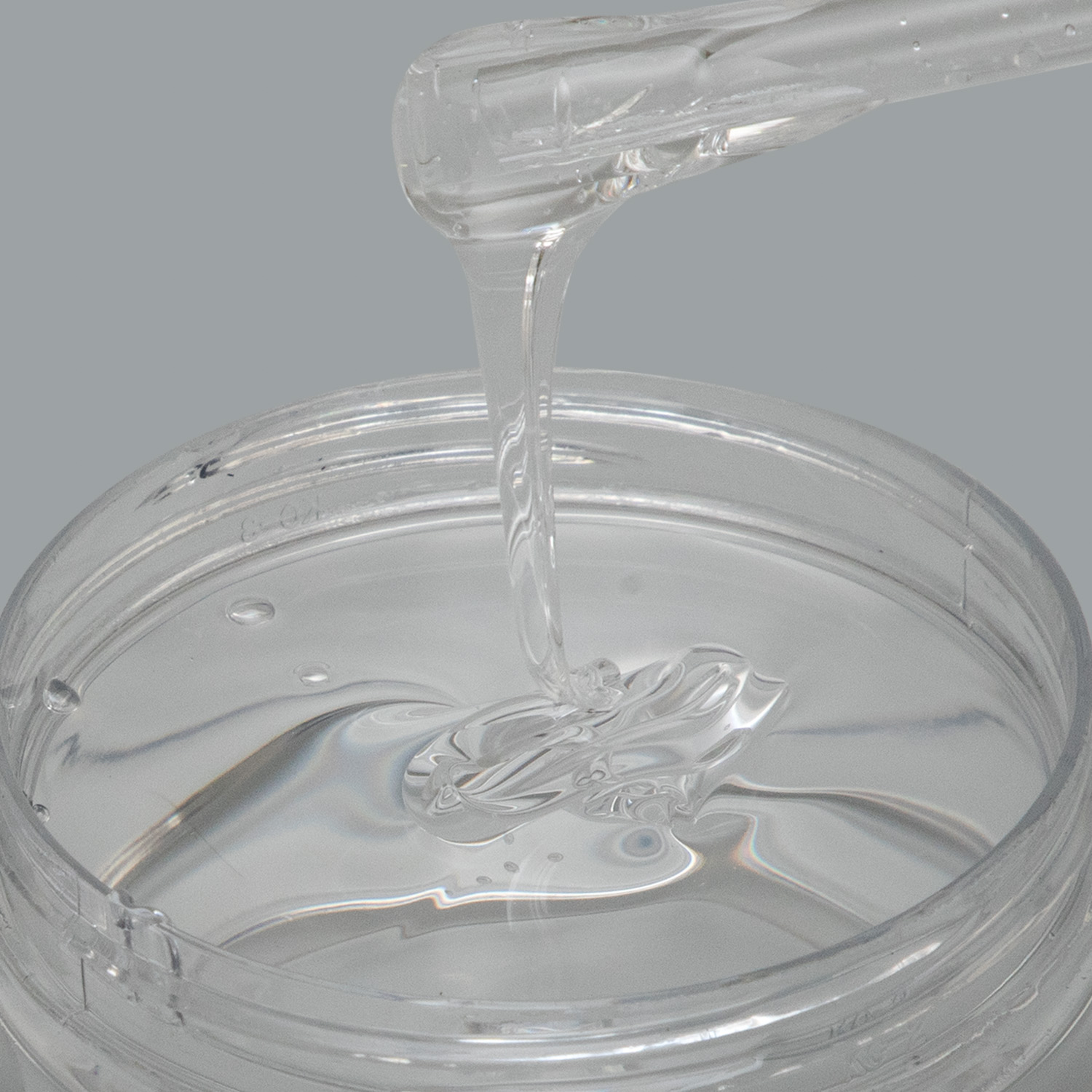
As a core upgraded category of methyl silicone oil, phenyl-modified silicone oil is a special organosilicon material obtained by introducing phenyl groups onto the polysiloxane main chain. Based on different phenyl contents, it can be divided into three major grades: low-phenyl, medium-phenyl and high-phenyl, each presenting distinct performance characteristics. When the molar proportion of phenyl groups is below 10%, the product retains most of the low-temperature resistance properties of methyl silicone oil, maintaining a fluid state at extreme temperatures as low as -60°C, while exhibiting better radiation resistance than ordinary methyl silicone oil, making it widely used in lubrication systems for aerospace extreme working conditions. When the phenyl proportion falls in the 10%-30% medium range, the product’s temperature resistance window is drastically expanded, with its thermal decomposition temperature rising from 200°C for ordinary methyl silicone oil to over 300°C. It also delivers outstanding arc resistance and insulating properties, serving as the preferred high-temperature insulating medium for the power and electrical industries. When the phenyl molar proportion exceeds 30% to enter the high-phenyl range, the product’s refractive index can be increased to over 1.50, with some specially customized formulas even reaching 1.55, which highly matches the refractive index of optical epoxy resin. Meanwhile, it retains the inherent low stress, high light transmittance and yellowing resistance of organosilicon materials, making it an irreplaceable core material in the current high-end optical packaging field.
For a long time, the production technology of high-end phenyl-modified silicone oil has been tightly controlled by a small number of overseas enterprises. Previously, China could only achieve mass production of general-purpose products with low phenyl content, while high-refractive-index products with high phenyl content had long faced core pain points including unstable synthesis processes, uneven phenyl group distribution, and insufficient light transmittance. Before this breakthrough, 100% of the high-refractive-index phenyl silicone oil required by China’s downstream high-end sectors relied on imports. This not only kept procurement costs persistently high, but also extended delivery cycles to 3-6 months, with constant risks of supply chain disruptions, which severely restricted the development pace of China’s emerging industries such as semiconductors and Mini/Micro LEDs. To break this "bottleneck" constraint, domestic research teams launched relevant technical research in 2014, successively overcoming three core technical challenges: high-purity distillation of phenylchlorosilane monomers, uniform random distribution of phenyl groups during anionic ring-opening polymerization, and low-volatility post-treatment purification. Finally, they realized stable mass production of high-end phenyl-modified silicone oil with 35% phenyl content and a 1.525 refractive index. The product’s volatile content is controlled below 0.1%, and its yellowing index after 1000 hours of long-term thermal aging at 200°C is lower than 1.0, with all core indicators outperforming mainstream international counterparts.
The industrial value brought by this technological breakthrough is rapidly spreading across the entire downstream chain. In the semiconductor packaging sector, the procurement price of imported high-refractive-index phenyl-modified silicone oil had long remained above 1200 yuan per kilogram. After localized mass production, the price of domestic products dropped directly to one-third of the imported alternatives, while the delivery cycle was shortened to within 7 days. Test data from China’s leading Mini LED packaging enterprises shows that display devices using domestic high-phenyl silicone oil as packaging material have their service life extended from 50,000 hours to 100,000 hours, and the light extraction efficiency of the screen is increased by 18%, completely solving the long-standing industry common problem of edge yellowing in large-size Mini LED backlight modules after long-term use. In the new energy vehicle sector, vehicle-mounted IGBT modules using domestic phenyl-modified silicone oil as insulating filling medium show an insulation performance attenuation rate of less than 2% during full-condition cycle tests from -40°C to 220°C, far below the 10% threshold required by industry standards, greatly improving the operational stability of core power devices in new energy vehicles. In the aerospace sector, low-phenyl phenyl-modified silicone oil, used as damping fluid for the attitude control system of new-generation spacecraft, has passed 1000krad gamma-ray irradiation tests in the space environment simulation chamber, with a kinematic viscosity change rate of less than 5% after irradiation, fully meeting the long-term operation requirements of deep space exploration missions.
The latest data released by the industry association shows that the total market size of phenyl-modified silicone oil in China has reached 18.7 billion yuan in 2026, with the annual compound growth rate remaining above 22% for 5 consecutive years. With the continuous release of localized high-end production capacity, the overall market size of phenyl-modified silicone oil in China is expected to exceed 50 billion yuan by 2030, driving the downstream related industries to generate more than 300 billion yuan in new output value. More importantly, this technological breakthrough has built a fully independent and controllable whole industrial chain system. All links, from basic phenylsilane monomer synthesis, polymerization process control to end-use application formula development, have achieved independent domestic production, completely eliminating dependence on overseas technology and supply chains. At present, the annual production capacity of high-end phenyl-modified silicone oil that has been built in China exceeds 30,000 tons, which can not only fully meet the demand of the domestic market, but also start to be exported in batches to Europe, Southeast Asia and other markets, breaking the monopoly of overseas enterprises in the global high-end phenyl silicone oil market. Industry experts point out that the localized breakthrough of phenyl-modified silicone oil is a landmark event marking China’s organosilicon industry transforming from "large and comprehensive" to "specialized and refined". In the future, with the development of more customized phenyl silicone oil products, new application spaces will be further opened up in emerging fields such as flexible displays, quantum dot packaging, and thermal conductive media for 5G communication base stations, providing a solid material base for the upgrading of China’s high-end manufacturing industry.