Hits: 88 img
Methyl Phenyl Silicone Oil Market Continues Growth as High-Performance Applications Drive Industry Upgrading
Within the specialty organosilicon product family, methyl phenyl silicone oil—a siloxane copolymer whose molecular chain contains both methyl and phenyl functional groups—is rapidly penetrating high-end sectors including cosmetics, electronic packaging, aerospace lubrication, and high-temperature heat transfer fluids, leveraging its exceptional combination of high-temperature resistance, low-temperature flexibility, lubricity, and chemical stability. Current market demand for methyl phenyl silicone oil presents a diversified development trend. The cosmetics industry shows increasing reliance on the product‘s ability to improve spreadability and film-forming properties, particularly as a core auxiliary in premium skincare and color cosmetics development. The electronics sector benefits from growing demand for high-temperature-resistant insulating materials in 5G equipment and new energy battery pack encapsulation, driving increased penetration of methyl phenyl silicone oil in semiconductor encapsulation adhesives and thermal interface materials. The industrial sector focuses on its irreplaceable role in aerospace lubrication systems and photovoltaic module sealants, with technological iteration in these application scenarios further reinforcing product upgrade requirements.
The core value of methyl phenyl silicone oil lies in the synergistic effect between methyl and phenyl groups. Compared to conventional methyl silicone oil, the introduction of phenyl groups significantly enhances thermal stability, radiation resistance, and oxidation resistance. Based on phenyl content, methyl phenyl silicone oil can be categorized into low-phenyl, medium-phenyl, and high-phenyl grades, each serving differentiated application scenarios. Low-phenyl silicone oil (approximately 5 mol% phenyl content) achieves a freezing point as low as -70°C with outstanding cold resistance, suitable for applications requiring extreme low-temperature flexibility. Medium-phenyl silicone oil balances high-low temperature performance, dielectric properties, and lubricity, representing the most widely applied category. High-phenyl silicone oil (phenyl mole fraction exceeding 50%) delivers exceptional thermal stability, capable of long-term service at 300-350°C with stabilizers, while exhibiting excellent radiation resistance.
Key performance specifications include refractive index of 1.470-1.485, kinematic viscosity range of 25-2000 cSt, flash point ≥250°C, dielectric strength >45 KV/2.5mm, volume resistivity ≥1×10¹⁴ ohm·cm, and dielectric loss tangent ≤1×10⁻³. These exceptional electrical properties make methyl phenyl silicone oil an ideal choice for high-low temperature lubricants in electronic and electrical equipment. Additionally, methyl phenyl silicone oil can be compounded with carbon black, lithium soap, or molybdenum disulfide to prepare high-temperature greases for lubrication in high-temperature fan bearings, ball bearings, automotive engines, and textile drying machines.
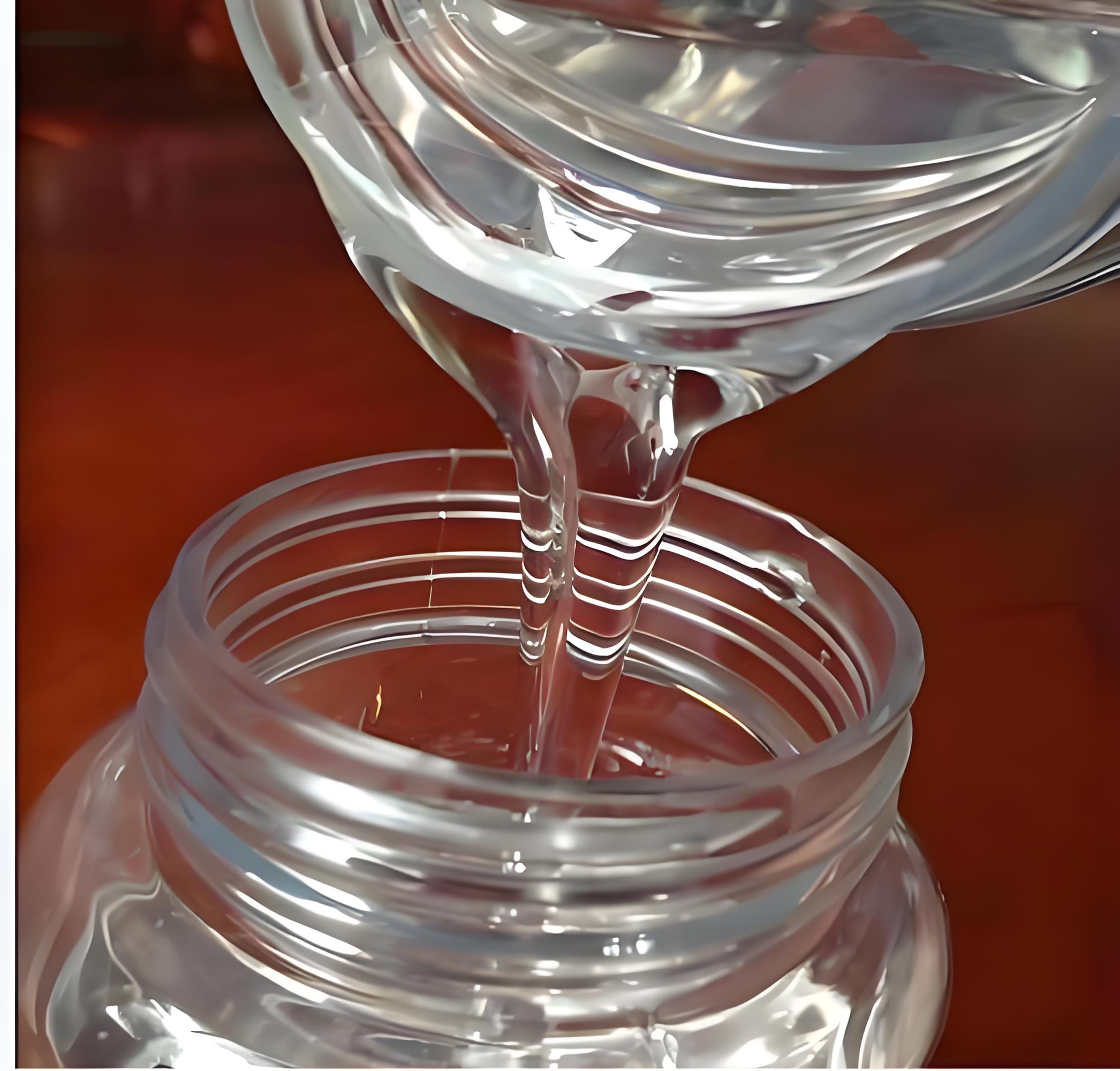
In the electronics sector, methyl phenyl silicone oil serves as high-vacuum diffusion pump oil. High-phenyl-content polymethylphenylsiloxane fluid exhibits colorless transparent oil characteristics with low saturated vapor pressure, high-temperature resistance, low-temperature resistance, oxidation resistance, and radiation resistance, making it an ideal liquid medium for achieving ultra-high vacuum, primarily used in electronics, metallurgy, and instrumentation industries.
In the personal care and cosmetics industry, methyl phenyl silicone oil has become an indispensable formulation component in premium skincare and color cosmetics, offering refreshing skin feel and excellent gloss. Products with varying phenyl contents can meet diverse formulation requirements from sunscreens and foundations to lipsticks and mascaras.
Looking ahead, methyl phenyl silicone oil development will center on “high purification, functional customization, and green chemistry.” In purity, electronic-grade applications impose increasingly stringent requirements for metal ion content and cyclic residues. In functionalization, novel molecular architectures including long-side-chain modification and vinyl termination are expanding applications in release coatings and antifouling coatings. In green chemistry, continuous production processes replacing batch processes can reduce energy consumption by over 30% with significant capacity efficiency improvements, while waste silicone oil recovery and purification technology under circular economy policies has become a new growth point in the industry chain.